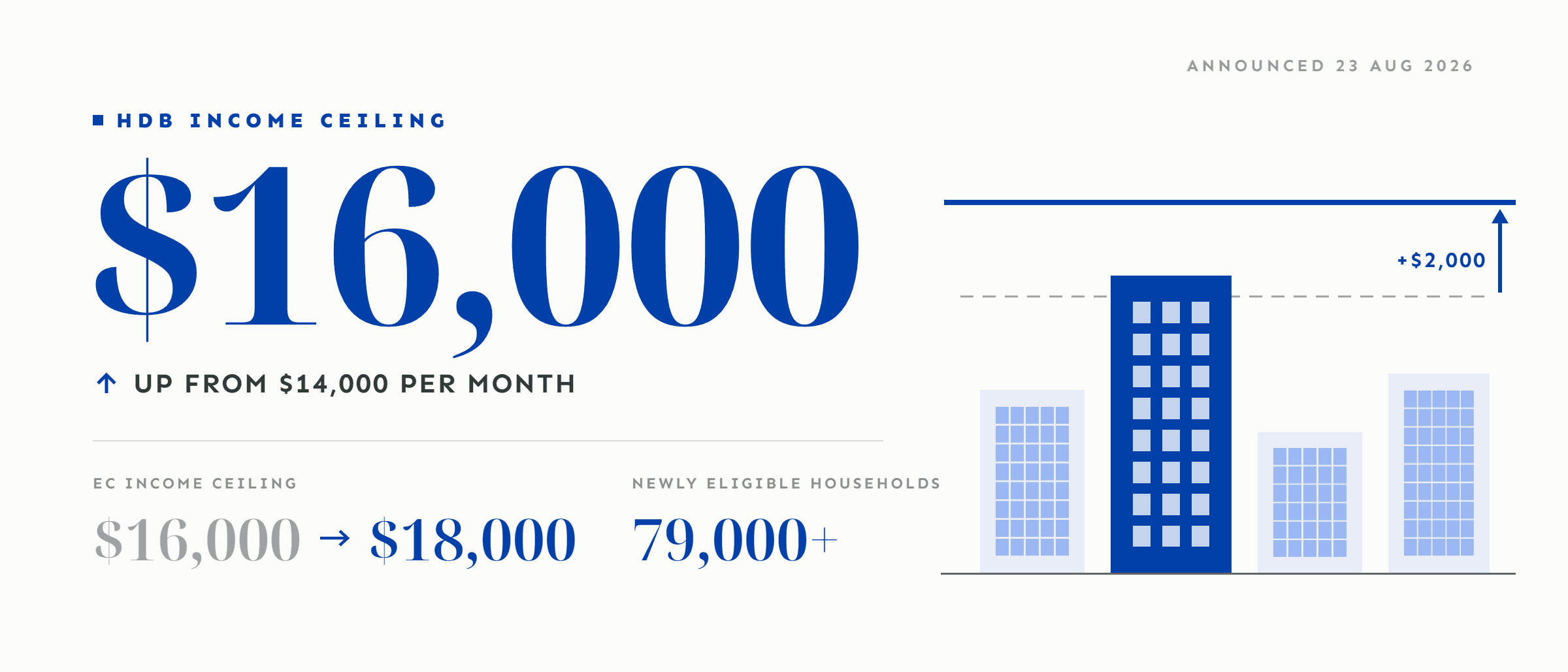
The income ceiling for BTO flats, resale grants and HDB loans rose from $14,000 to $16,000 on August 24, 2026, and the EC ceiling rose from $16,000 to $18,000. Our count from SingStat's income bands puts at least 79,000 households in the new HDB band and about 70,000 in the EC band. We estimate 1,600 to 4,000 extra BTO applicants a year, skewed toward five-room and larger flats across Standard, Plus and Prime projects alike, with modest price pressure on larger resale flats. The EC change covers only sites tendered from August 24, so those launches arrive around 2028, and the November 2026 BTO exercise gives the first read on the rest.
Sources: MND, HDB, SingStat, AsiaOne, Mothership, Yahoo News SG, EdgeProp
What changed on August 24
Prime Minister Lawrence Wong raised the HDB income ceiling at the National Day Rally on August 23, from $14,000 to $16,000 a month for families (AsiaOne). It took effect the next morning. The EC ceiling moved too, from $16,000 to $18,000, and the ceiling for singles aged 35 and up went from $7,000 to $8,000. The last adjustment was in 2019.
The word "finally" is earned. While the ceiling stood at $14,000, the share of households earning above it kept growing: 26.7% in 2019, 34% by 2024.
Source: data.gov.sg, resident households by monthly household income from work
| Scheme | Old ceiling | New ceiling | Takes effect |
|---|---|---|---|
| BTO flats, resale with CPF grants, HDB loan (families) | $14,000 | $16,000 | HFE letter applications from Aug 24, 2026 |
| Subsidised flat or HDB loan (singles 35+) | $7,000 | $8,000 | HFE letter applications from Aug 24, 2026 |
| New Executive Condominiums | $16,000 | $18,000 | EC sites tendered from Aug 24, 2026 only |
The coverage tells you who qualifies. It does not tell you how many buyers that adds, so we counted both the pool and the likely buyers. SingStat publishes how many resident households sit in each income band. Add up the bands the new ceilings crossed and you get the pool: about 79,000 households for the HDB schemes, and about 70,000 more for future ECs. Together that is roughly one in ten households in Singapore. The buyer count is far smaller: we estimate 2 to 5% of the new HDB band goes house-hunting within a year, roughly 1,600 to 4,000 extra applicants.
How many buyers does the $16,000 ceiling unlock?
Singapore had 1,487,100 resident households in 2025, per SingStat. Here is where the two new bands sit:
| Income band | Newly eligible for | Share of households | Households |
|---|---|---|---|
| $14,001 to $16,000 | BTO, resale grants, HDB loan | 5.3% | ~79,000 |
| $16,001 to $18,000 | New ECs (from 2028 launches) | 4.7% | ~70,000 |
| Combined | Some form of subsidised housing | 10.0% | ~149,000 |
Source: SingStat Table Builder, resident households by monthly household income from work, 2025
Source: SingStat Table Builder, 2025
Eligible is not the same as buying. Most of these households are settled: across the whole market, only 3 to 4% of households buy or sell a home in any given year. And about one in five households island-wide lives in private property, with a higher share in these income bands. For them, little changes for now, because anything subsidised still carries a 30-month wait after selling the private home.
That still leaves a large group of renters, couples setting up home, and families sitting in flats they have outgrown, who earned too much for a ballot until August 24.
BTO: our estimate is 1,600 to 4,000 extra applicants
Assume 2 to 5% of the 79,000-household band actively looks for a home in the next 12 months. That yields roughly 1,600 to 4,000 additional BTO applicants and grant-eligible resale buyers a year. Against application volumes that run in the tens of thousands, that is a low-to-mid single-digit lift in application rates. That is a real lift, but not a flood.
Who they are matters more than how many. A household earning $15,000 a month can carry a bigger loan, so expect the lift to show up in five-room and larger flats, across Standard projects as much as Plus and Prime ones. Huttons' Lee Sze Teck expects stronger demand at attractive locations such as the Bayshore and Toa Payoh projects, and Realion's Christine Sun expects newly eligible buyers to stretch to larger or higher-floor units (Yahoo News SG).
One group inside the band gains more than the rest: households with strong income but thin CPF and savings, usually from starting work late. With an HDB loan, the downpayment can be paid fully from CPF and is staggered for BTO, so balloting no longer needs a big pile of cash.
The first proper look comes with the November 2026 exercise, about 7,960 flats. Application rates there, against what similar projects drew before the change, are the cleanest before-and-after test. On the supply side, HDB expects 13,500 to 19,500 flats to reach MOP each year through 2028, with more than 50,000 BTO flats launching between 2025 and 2027, so analysts do not expect the added demand to overwhelm supply.
Will resale flat prices rise because of it?
Households earning $14,001 to $16,000 could already buy resale flats: resale has no income ceiling unless you want grants. What changed is the money behind the purchase. The band now qualifies for CPF housing grants, up to $80,000 for families on smaller flat types, and for the HDB housing loan. That raises budgets for buyers already in the market rather than adding many new ones. ERA's Marcus Chu reads it the same way: more households take the HDB loan, budgets rise, and that can push resale prices up.
Expect the pressure where this band shops, in larger flats between $700,000 and $1 million. Some of the grant money will end up in asking prices over time, which is worth remembering if you are watching the million-dollar flat count. A partial offset runs the other way: some households who bought resale only because BTO was closed to them will now ballot instead.
The genuinely new buyers are the ones short on cash. A bank loan needs at least 5% of the price in cash. An HDB loan does not: the downpayment can come entirely from CPF, and grant money lands in CPF and counts toward it. For a high-income household that started working late, that is the difference between saving for several more years and buying now.
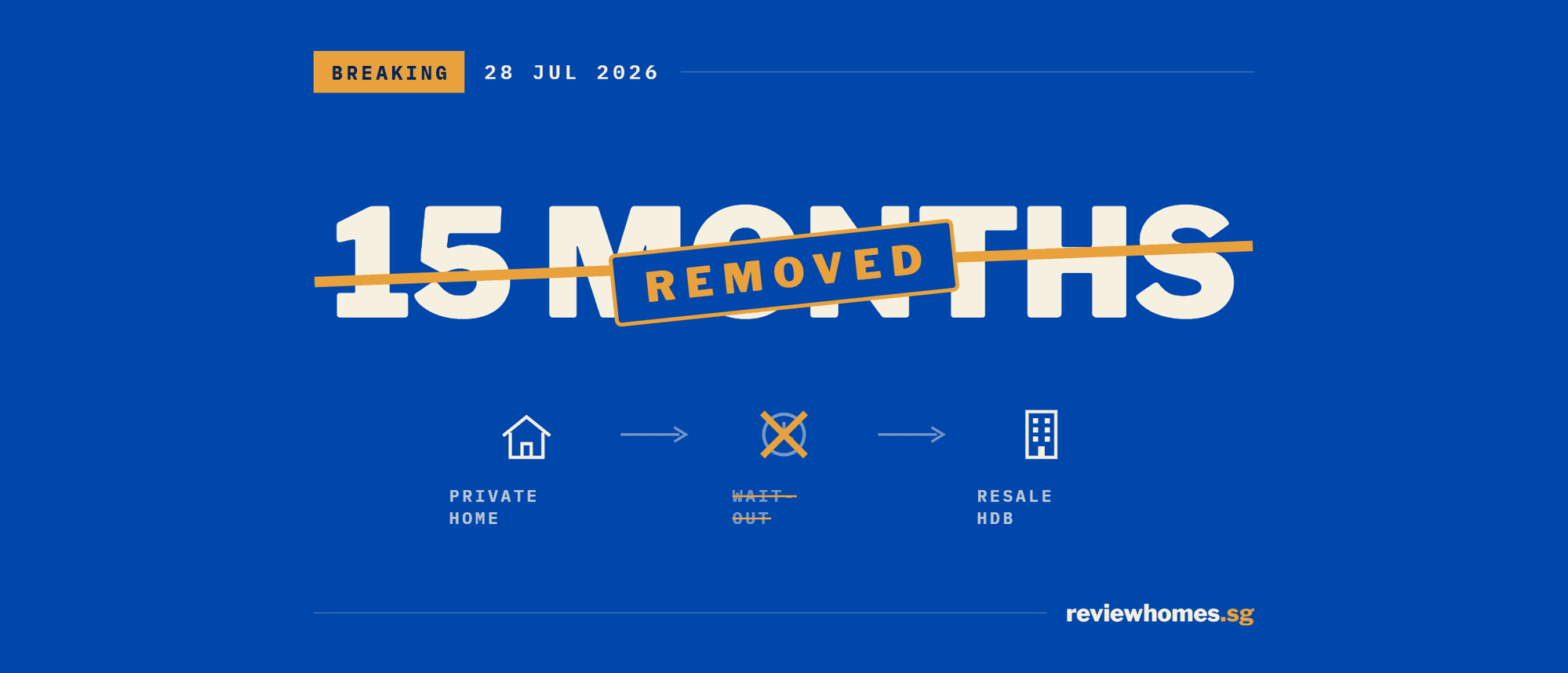
One thing will make the Q4 numbers hard to read. The 15-month wait-out was removed on July 28, so private downgraders re-entered the resale market in the same quarter. Any Q4 price strength will mix the two effects, and they push the same way. Our call: prices firm modestly in the $700,000 to $1 million resale range, and volumes stay roughly flat with a small lift from the buyers who were waiting on cash.
The new EC ceiling arrives in 2028
The 70,000-household EC band looks like the bigger pool. It is the slower one. The $18,000 ceiling applies only to EC sites whose land tenders close on or after August 24, 2026, and three sites are already in that queue. The Canberra Drive EC's tender closes on October 1, 2026 (ERA). The Sembawang Drive site was tendered in June, and the Jurong East Avenue 1 EC goes to tender in December, the first EC land in Jurong East since 1996.
Those are the ECs the new band qualifies for. The wait is the catch: an EC opens for sale roughly 18 to 24 months after the land is awarded, so the first sales gallery an $18,000-income household can walk into is around 2028. The ECs selling today stay at $16,000, and so do the three launches coming up at Senja Close, Woodlands Drive 17 and Sembawang Road, because their land tenders closed before the cutoff.
That future buyer also meets a tougher EC than the ones that made the scheme popular. Since the May 2026 rule changes, new EC sites carry a 10-year MOP, no deferred payment scheme, and a 90% first-timer quota. Realion's Christine Sun does not expect a significant demand jump for that reason.
The first place to see the effect is in what developers pay for EC land. They now know 70,000 more households can buy their future units, and if they believe those buyers will show up, they will bid more for the sites. The Canberra Drive tender on October 1 is the first test.
What this means for you
If your household earns $14,001 to $16,000: the ballot is open to you for the first time, and so are resale grants and the HDB loan. Apply for an HFE letter before the November exercise. Even if you never ballot, you now qualify for CPF grants of up to $80,000 when buying a resale flat.
If your household earns $16,001 to $18,000: you qualify for the newer ECs, the ones on sites tendered from August 24, 2026, starting with Canberra Drive. Their sales launches are still one to two years out, and the ECs selling today stay at $16,000. Until the new batch opens for sale, your options are unchanged: resale without grants, or private.
If you earn well but your CPF and savings are thin: the HDB loan is the change that matters. The downpayment can come fully from CPF, staggered for BTO. Run your sums again before assuming you need years more of saving.
If you are selling a five-room flat: your buyer pool grew twice this quarter, once from returning downgraders and once from this. That said, viewings move before prices do. Watch what closes around you through Q4 before adjusting your asking price.
If you already qualified before the change: more names join the ballots, and not only at the top end. Some new entrants will stretch to Plus and Prime projects, but plenty will go for Standard flats, which cost less and are now open to them too. November's application rates will show where the competition lands.
What we are watching
Three numbers through the next six months: application rates at the November 2026 BTO exercise, the Q4 resale index alongside the $700,000 to $1 million band, and the Canberra Drive EC bid on October 1. Our Telegram group carries the shorter updates between long reads.
We read every reply. If there is a topic you want us to cover, a condo you would like reviewed, or a property journey worth telling — your own purchase, your near-miss, or what you are holding right now and trying to decide what to do with — write to us. Some of these become full articles on the site. Some become case studies. We have turned reader questions into full guides before, and we will do it again.
Send us a topic on WhatsAppData sources: joint MND-HDB statement, August 23, 2026 (AsiaOne, Mothership), SingStat Table Builder and data.gov.sg household income data, Yahoo News SG analyst coverage, EdgeProp on the May 2026 EC rules
Published by MJ Review Homes (reviewhomes.sg) | PropNex Realty Pte Ltd | Shaik Amar R058640H | Myra Jalil R058979B | +65 9690 5440 | +65 9738 3705