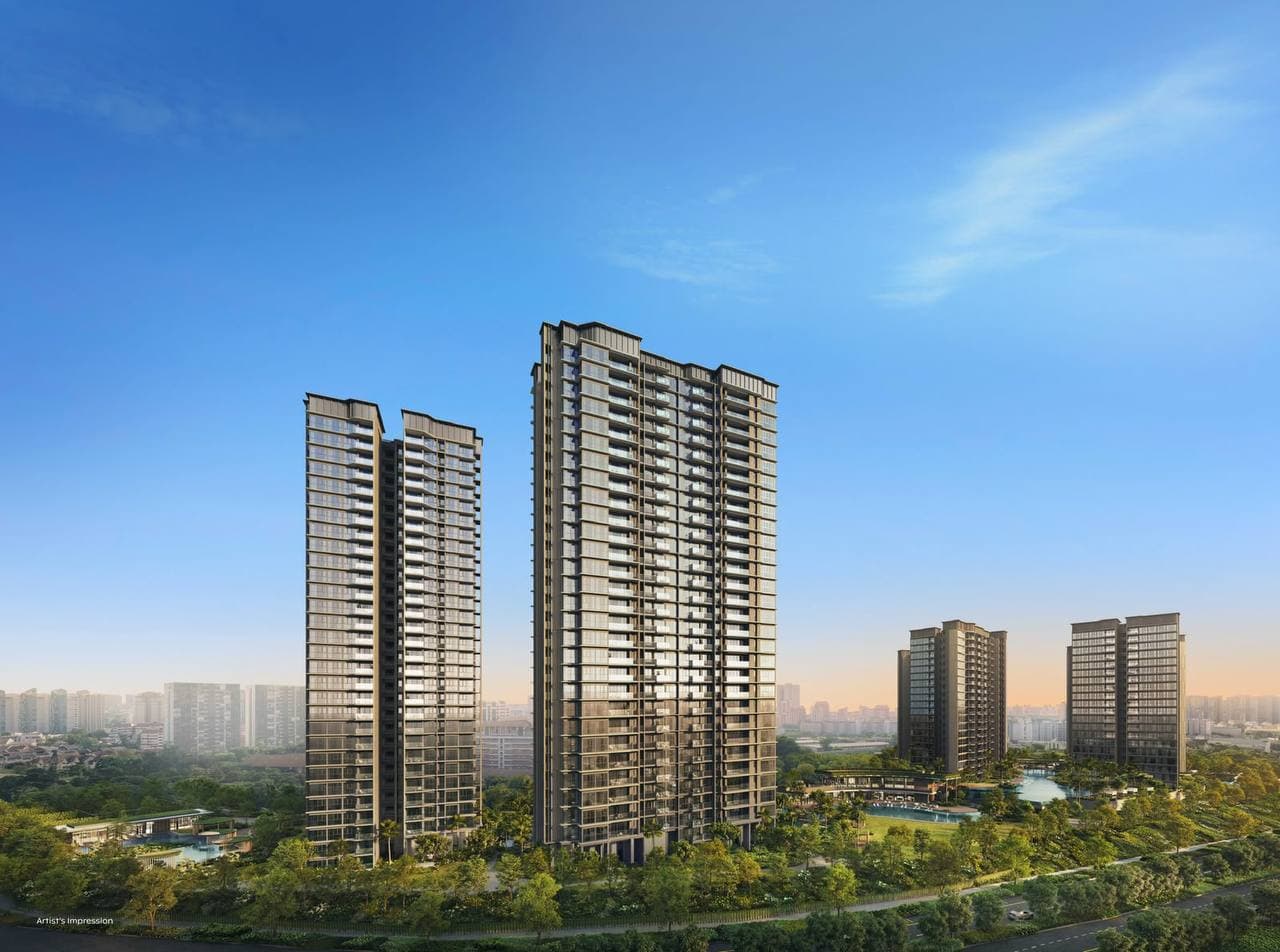
Two things dominate every property conversation in Singapore: price and timing. Is it a good price? Is it a good time to buy? Your banker says wait. Your uncle says buy now. The property forum says the market will crash next quarter. The agent says it always goes up.
Both obsessions have the same problem. In today's market, you are not getting a bargain. Everything trades near all-time highs. And timing? Nobody — not a single analyst, guru, or weekend seminar speaker — can consistently predict the Singapore property market in the short term. Anyone who claims otherwise is selling you something.
So instead of chasing two variables you cannot control, we focus on what you can: what you actually buy.
A good property purchased before the 2008 crash and held for several years still appreciated. A good property purchased before the 2013 cooling measures and held through the dip still came out ahead. The URA price index shows this: averages recover over time.
URA Private Residential Property Price Index
Base Quarter: 2009 Q1 = 100 | Source: URA Realis
But averages hide the individual stories. Because bad properties stagnate even in boom markets. The CBD is the clearest example. Fourteen years of holding, prime location, attractive entry pricing — and owners still underwater. Location was there. Price was fair. Something else was missing entirely.
That missing piece is what our QPE framework identifies.
How we review: the QPE framework
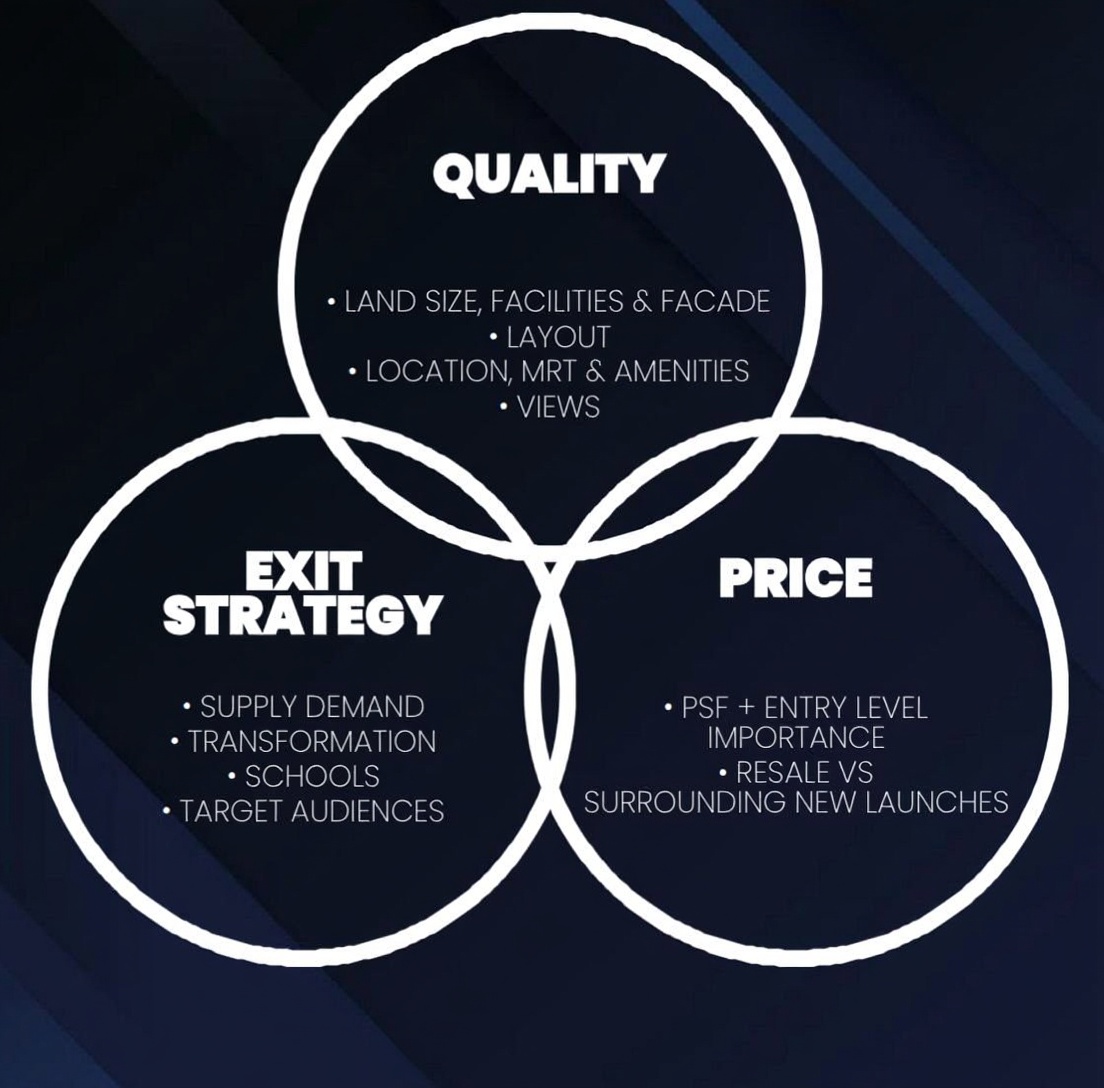
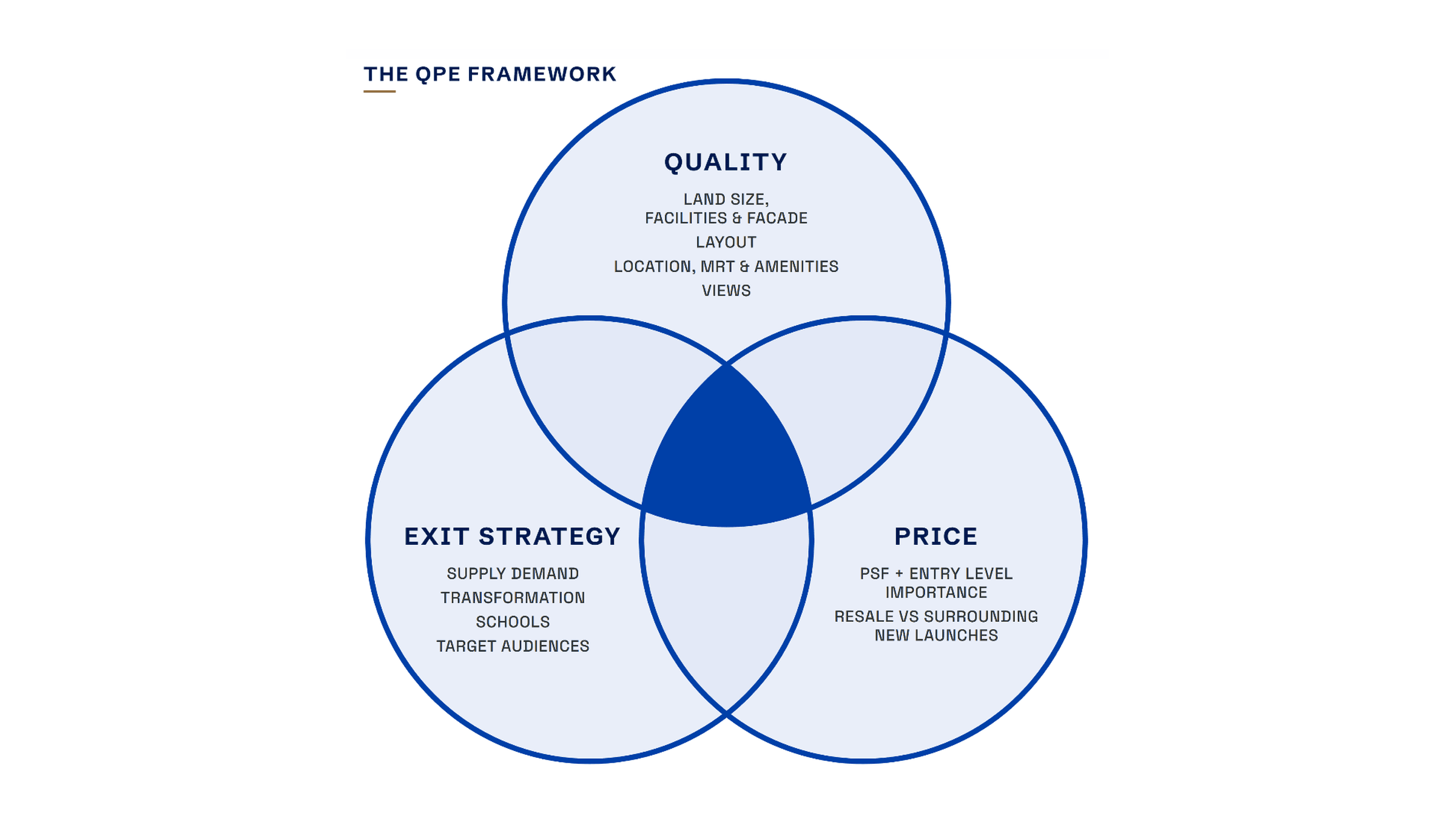
Every review on this site runs through our QPE framework: Quality, Price, Exit.
Quality covers land size, facilities and facade, the layout, location with its MRT and amenities, and views. Price weighs the entry price, and only then the psf, against resale in the area and the new launches around it: is there a price buffer, or are you paying above what the market has proven? Exit asks who buys from you when it is time to sell: supply and demand in the area, the transformation plans around it, the schools nearby, and the target audiences a unit like yours attracts.
All three need to check out. If one fails, you need to know which one — and why.
Think of it the way you would evaluate a stock. Nobody walks into a brokerage and asks "will this stock make money?" That is the wrong question. You ask: what is the downside risk? What is the profit and loss profile? How does this company perform against its competitors? You look at the numbers, not vibes.
Property is no different. A condo is not just a home purchase, even if you want it to be. It is a financial position. What is your downside risk if the market softens? How does your unit's pricing compare against competing products in the same area? Who is the buyer when you exit, and how deep is that pool? The QPE framework forces those questions before you sign anything.
Take Jadescape as an example. Quality was solid: generous land size, well-designed units, strong facilities. Exit strategy was sound: Marymount MRT nearby, established neighbourhood, identifiable buyer pool. But price was the weak link. A two-bedroom one-bathroom unit at $1.8 million when a typical OCR two-bedroom one-bathroom trades at $1.3 million, and a two-bedroom plus study at $2.1 to $2.2 million, that stretches the definition of a safe entry.
Two circles checked out. The third raised a flag. That single gap is enough to change the outcome entirely.
QPE Quality: why land size and layout matter more than location
Quality splits into four elements. We weight them differently depending on whether you are buying for own use or investment, but the hierarchy stays consistent.
| Element | Weight | What to Check |
|---|---|---|
| Land size, facilities, facade | Critical | Plot area, ground-level amenities, pool, landscaping, upkeep |
| Layout and room sizes | Critical | Common rooms 9+ sqm, enclosed kitchen, efficient corridors, balcony proportion |
| Location and MRT access | Important | MRT walk time, bus connectivity, neighbourhood amenities |
| Views and facing | Nice to have | View premium relative to returns, directional preference |
The first two are non-negotiable. The second two are good to have.
Land size, facilities, and facade
This is the most neglected aspect of condo evaluation, and arguably the most important one. Larger land plots allow developers to build proper ground-level facilities, landscaped gardens, and generous common areas. Smaller plots push everything onto sky terraces and rooftop decks, functional, but rarely the same experience.
The emotional impact is real. Walk through a development with sprawling grounds, a 50-metre lap pool, landscaped gardens, and a well-maintained clubhouse, and you feel something. That feel-good factor directly affects what buyers are willing to pay at resale. Not on paper — in person. Bringing kids down for a walk after dinner. Having guests over and walking the grounds. These moments sell units at higher prices, and the data consistently reflects it.
Some recent developments that deliver on this front: Normanton Park, Parc Clematis, Leedon Green, Seaside Residences. On the resale side, properties across the East Coast, Waterside Residences, Silversea, show how land size and facilities sustain value over decades. Ardmore Park in the prime districts is another example: the plot and grounds do the heavy lifting.
And then there is the Newton anomaly. Most projects in the Newton area have struggled with profitability over extended holding periods. 38 Jervois, 26 Newton, Altia at Newton: the returns have been underwhelming. But Park Infinia, sitting in that same neighbourhood with a generous plot and well-maintained facilities, bucks the trend entirely. Same location. Fundamentally different outcomes. The difference? Development quality.
This is also why small projects tend to underperform. The common explanation is low transaction volume: fewer comparable sales, harder for agents to price competitively. That is the symptom, not the cause. The real reason is that a 50-unit boutique condo on a tight plot cannot replicate the lifestyle experience of a 500-unit development with space to work with. When buyers compare options at similar price points, the larger development wins on gut feeling alone.
Unless price is wrong, find a large development with proper grounds and it rarely loses money.
Layout: the soul of a Singapore condo
If land size and facilities create the second impression (the downstairs walkabout after the viewing), layout creates the first. Open the floor plan, see weird angular rooms and inefficient corridors, and the buyer already has an excuse to look elsewhere, or more precisely, an excuse to negotiate harder.
The practical test is simple: can every bedroom fit at least a queen-sized bed? If your common bedroom is under 8 square metres, you are looking at a single bed and nothing else. That is not a bedroom for a family. The room size standards we use in every review:
| Room Size | What Fits | Verdict |
|---|---|---|
| Under 7 sqm | Single bed, nothing else | Not a real bedroom |
| 7-8 sqm | Queen fits, but no wardrobe or desk | Tight — guests only, not daily living |
| 9 sqm | Queen + wardrobe | HDB standard minimum |
| 10 sqm | Queen + wardrobe + small desk | Livable |
| 11+ sqm | Queen + wardrobe + desk + walking space | Comfortable |
These are not arbitrary benchmarks. They determine whether a unit works for a family or only appeals to investors and singles. A three-bedroom unit marketed as a "family home" with 7 sqm common rooms is misleading, and the resale market eventually corrects for it.
The difference between a good layout and a weak one shows up directly in profit. Two condos side by side in the Queenstown area, similar age, similar tenure, sharing the same MRT access and amenities.
Queens Peak Type C7 — 1,001 sqft (93 sqm)
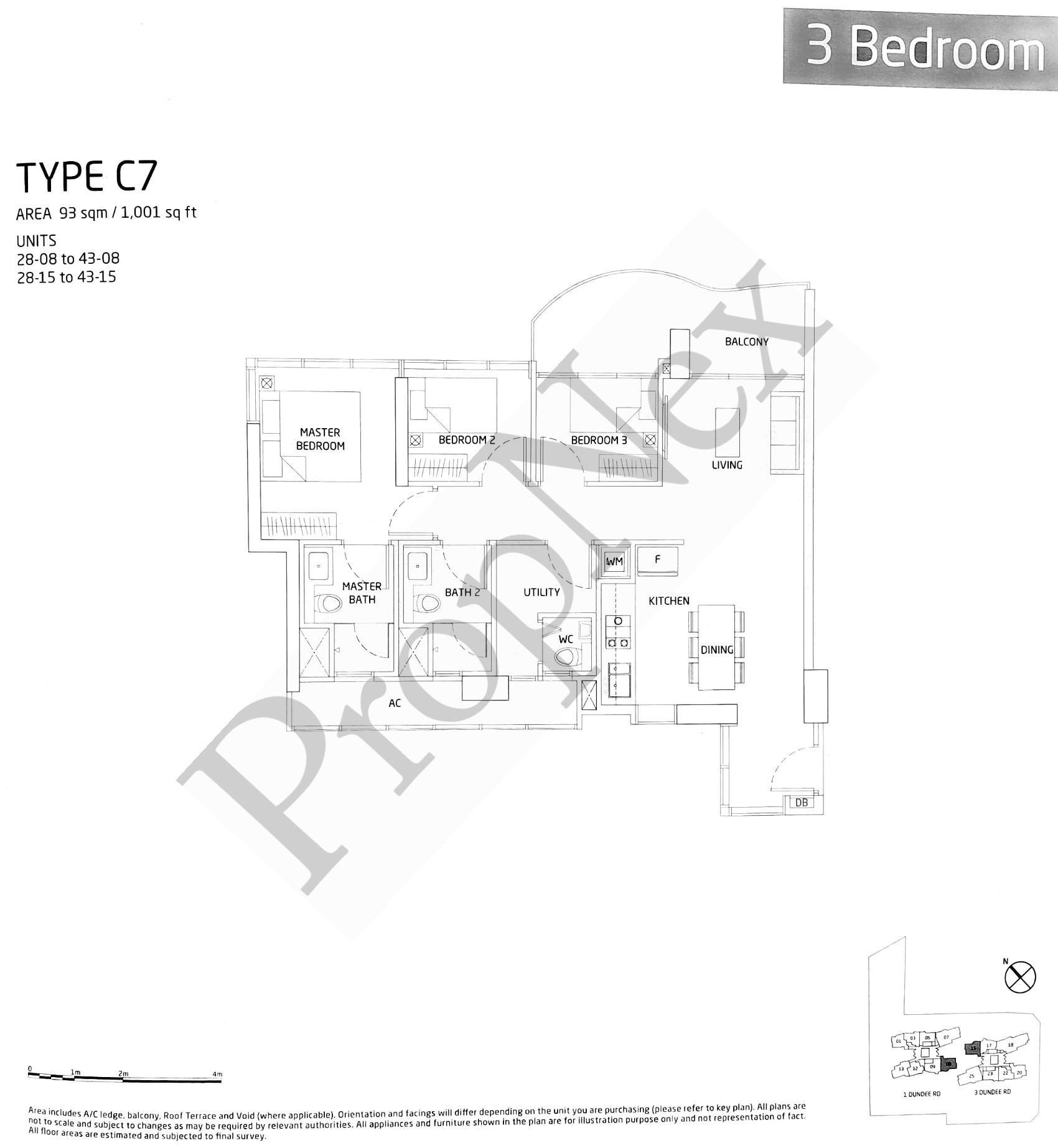
Open concept kitchen flowing into the dining area, a red flag in a mostly residential neighbourhood. The balcony stretches across the unit, eating into bedroom space. Common rooms fit a super single bed at best. The utility room is bigger than the bedrooms. You look at this layout and wonder what was being optimised for.
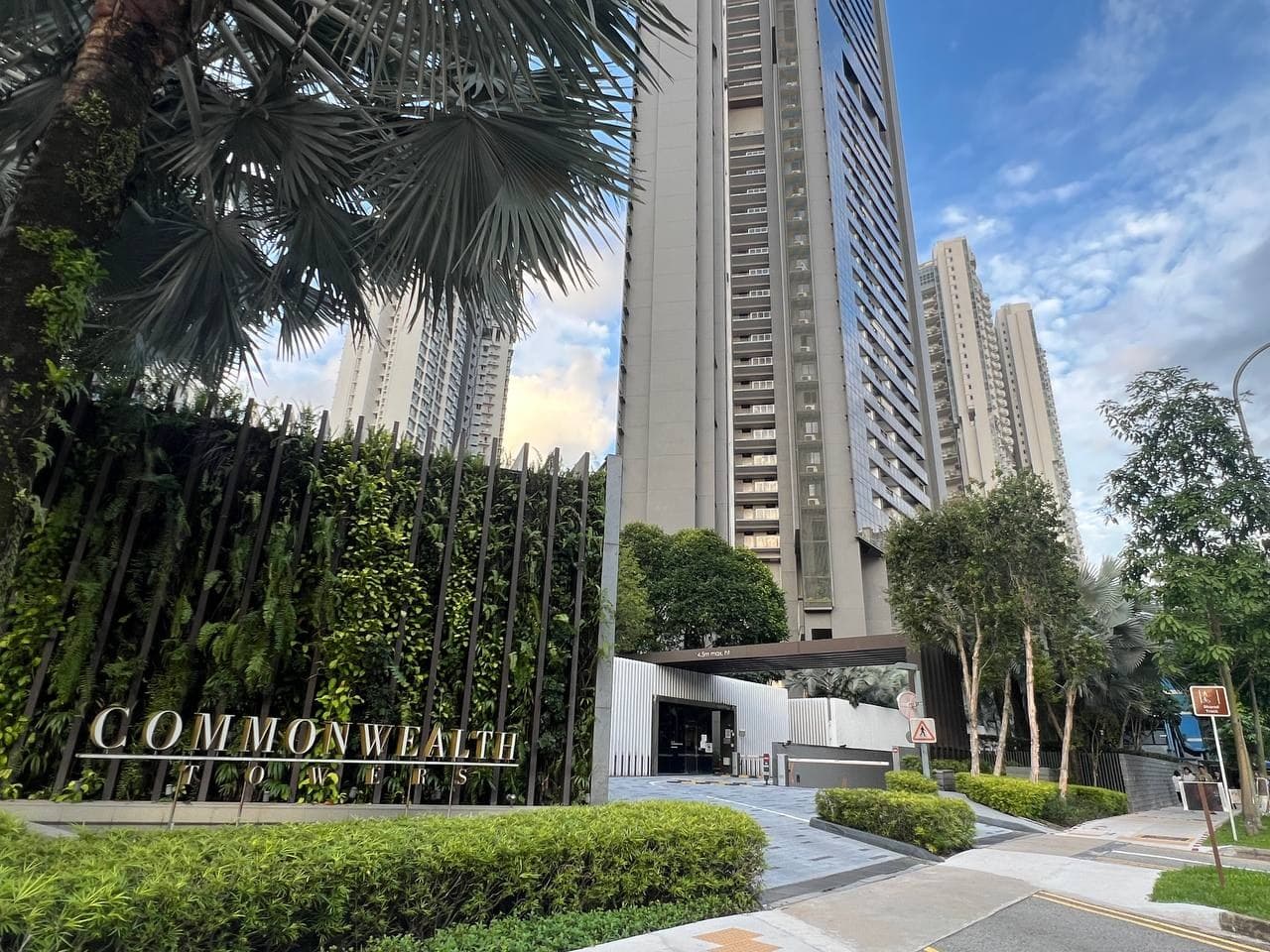
Commonwealth Tower Type (3y)a — 1,076 sqft (100 sqm)
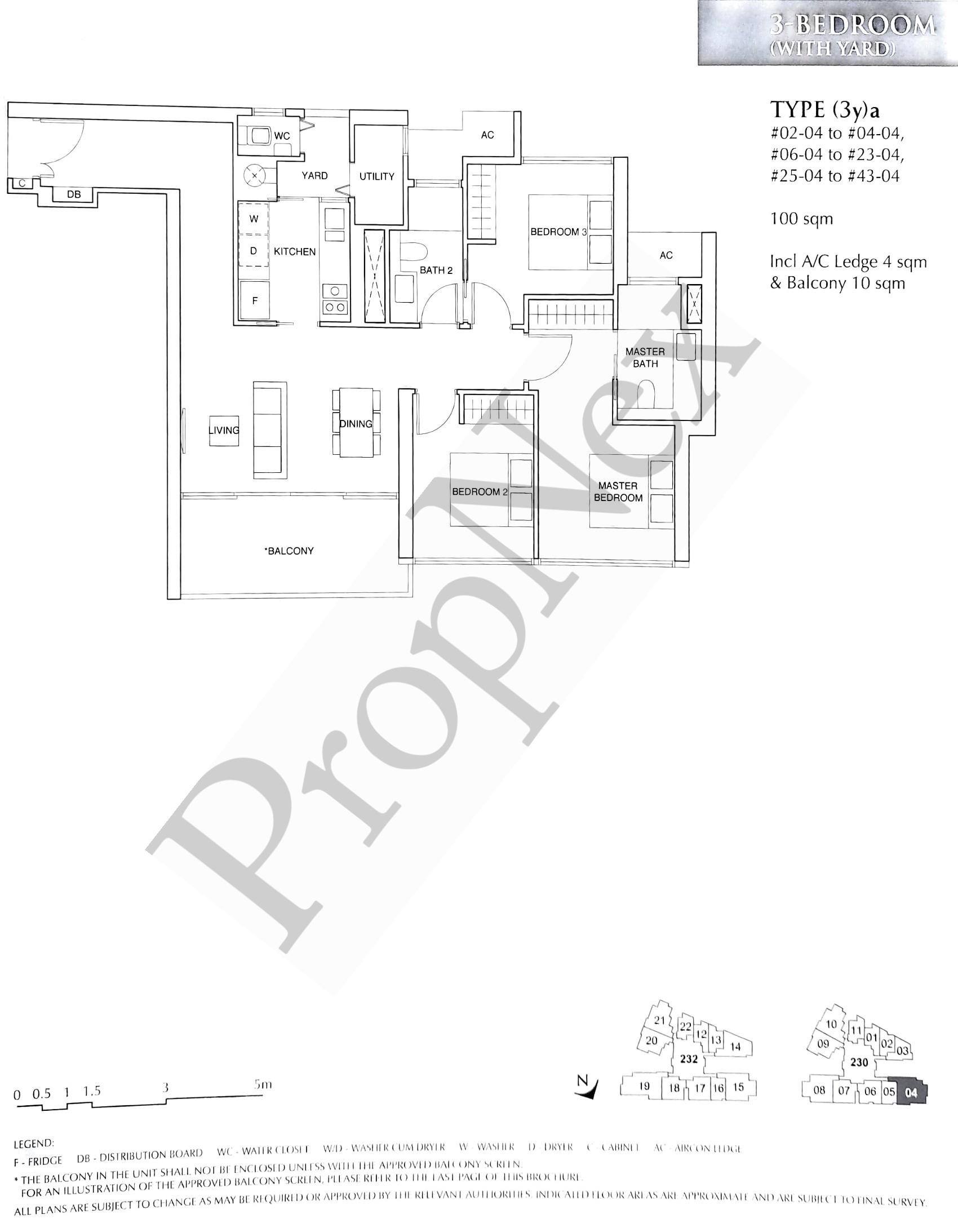
Enclosed kitchen. Proper yard and utility space. Common bedrooms around 10 sqm each, queen-size bed fits comfortably with a wardrobe. Master bedroom with a separate walk-in wardrobe. The balcony is 10 sqm, generous but it does not cannibalise the rooms.
Over the same nine-year holding period, the Queens Peak unit generated $400,000 to $600,000 in profit. The Commonwealth Tower unit generated $700,000 to nearly $1 million, almost double. Same area, same vintage, same convenience. Layout made the difference.
Layouts are subjective, but profits are not. You can debate open versus enclosed kitchens all day. The resale market tells you what the majority of buyers actually accept. And the majority want enclosed kitchens in residential neighbourhoods, properly sized bedrooms, and functional living spaces where cooking happens daily.
Location and MRT: important, but not everything
The standard property advice, location, location, location, is not wrong. But it is incomplete.
Location matters enormously for own-use buyers. If your parents are in Bedok and you visit them twice a week, living in Bedok is a rational choice. If your office is in Tanjong Pagar, the CBD makes practical sense. For personal use, location is often the deciding factor and that is perfectly fine.
But from a pure investment standpoint, location can be overrated. Integrated developments with MRT stations at the doorstep, malls connected to the lobby, and every amenity within reach, they should, logically, outperform everything else. The profitability data does not always agree. Some of the most accessible, most "well-located" developments have underperformed condos that are, on paper, far less convenient.
The reason is straightforward: location is just one of three circles. A brilliant address with a poor layout, an undersized plot, and inflated pricing does not fix itself over time. The postcode stays the same, but the exit price tells you what actually happened.
MRT proximity is a plus. Always note it, always value it. But do not treat it as the sole decision driver.
Views: good to have, not a dealbreaker
Two units in the same development. Ground floor, poor view: $1.35 million. Top floor, panoramic view: $1.66 million. That is a $310,000 premium for the view.
When both sold, the lower floor went for $1.75 million, generating $400,000 in profit. The top floor sold at $1.975 million, a record for the project, but only $320,000 in profit. The cheaper unit with the worse view outperformed by $80,000 in absolute terms.
If the view premium is modest, take it. You will enjoy living there and the cost difference is manageable. If the premium is substantial, $200,000 to $300,000 or more, the return may actually be better with the lower floor. Views are a lifestyle choice, not automatically an investment advantage.
QPE Price: how to benchmark a Singapore condo
For resale condos, quality and exit strategy stay constant over time. The land size does not shrink. The layout does not change unless you renovate. The nearby schools, the MRT lines, the buyer pool: these remain largely stable.
Price is the only variable. A condo that was overpriced three years ago might be fairly priced today. A condo that was a bargain in 2023 might be expensive now if prices have run ahead. Quality and exit are locked in the day the development completes. Price is what moves.
Benchmarking against the right comparisons
Knowing a price is meaningless without context. $1.5 million for a three-bedroom sounds reasonable until you compare it against every other three-bedroom in the same neighbourhood that a buyer at the same budget would actually cross-shop.
The method we apply in every review:
Identify the comparison set. Not just condos next door, but condos that a buyer at that budget would realistically consider. If you have $2 million for a three-bedroom in Queenstown, you are comparing against every option in that corridor: Queenstown condos, Red Hill options, and potentially even the new launch that is resetting price expectations in the area.
Compare total price by unit type. A $2,400 PSF condo at 1,650 sqft and a $2,850 PSF condo at 1,200 sqft may cost roughly the same in total dollars. PSF comparison alone is misleading when unit sizes differ. Buyers pay the total, not the rate. We applied this exact budget-band method in our Tampines 3-bedroom condo comparison, and the results surprised people: condos that looked expensive on PSF were competitive on total price, and vice versa.
Understand the price ceiling. The highest proven transaction for a comparable product in the same micro-market tells you what buyers have actually been willing to pay. If your entry price is below that ceiling, you have a buffer. If your entry is above it, you are paying more than anyone has before, and demand needs to be strong enough to justify it.
Watch for value traps. Cheap does not mean good. A condo trading below its neighbours might have a layout problem, a supply problem, or a buyer-pool problem. Price research starts first, but once something looks reasonable on price, stress-test it against quality and exit. A cheap condo with terrible room sizes and no identifiable buyer pool is not a bargain. It is a trap.
The person selecting the comparison set is where experience matters. Compare against the wrong condos and the conclusion is wrong from the start. That is why we run the same structured method on every review rather than relying on gut feeling.
How we calculate buffer
Every review on reviewhomes.sg includes a buffer calculation. The formula:
Buffer % = ((Benchmark Price - Entry Price) / Entry Price) x 100
A positive buffer means someone has already paid a higher price than what you are paying, so your downside is protected. A negative buffer means you are testing the ceiling. That does not automatically mean the condo is a bad buy, but it means the demand (upgrader wave, integrated MRT, zero competition) needs to be strong enough to support the premium.
QPE Exit strategy: who buys your condo when you sell
Buying is easy. You see something, you like it, you buy it. Selling is where you find out if the investment actually worked. Four factors determine how that sale goes.
| Factor | Weight | What to Check |
|---|---|---|
| Supply and demand in area | Critical | Competing developments, total units, MRT access |
| Target audience | Critical | HDB upgraders vs investors vs downgraders — who pays you? |
| Schools within 1km | Good to have | Top primary schools create annual demand waves |
| Transformation plans | Overrated | Often priced in, takes too long, attracts investors not families |
Supply and demand: how much competition exists
When you buy into a neighbourhood, look at how much competing supply exists around you. One residential enclave illustrates this problem perfectly: close to 15 developments within a tight cluster, totalling over 4,000 units, no MRT station, and no major amenities to anchor demand. The developments were launched at different times across the years, which means price points are scattered.
A buyer looking in that area would need three months just to view everything before shortlisting. When competition is that intense, price appreciation becomes difficult. Every seller competes against a dozen other developments, each with their own asking prices, listing photos, and agents. Standing out is nearly impossible.
Compare that with a neighbourhood where your condo is one of two or three private options. Negotiating power shifts to the seller. The buyer has fewer alternatives, and the urgency to close increases.
Target audience: know who pays you
Before buying, answer one question: who is the next person to buy this unit from you?
HDB upgraders, landed downgraders, condo upgraders, foreigners, investors: each group behaves differently. HDB upgraders and owner-occupiers pay premiums because they are buying a home, not running a spreadsheet. Investors calculate yield, negotiate hard, and move to the next option if the numbers do not work.
The CBD is the cautionary tale. Strip away locals — most Singaporeans do not aspire to live in the financial district for own use. Strip away foreigners who now face steep ABSD. What remains? Investors. And an investor-dominated market is the hardest to exit profitably, because every buyer is calculating return, not paying for the experience of coming home. The last person you want to deal with as a seller is someone who will move to the next condo the moment you do not meet their price.
The condos that perform best at exit have broad, deep buyer pools, predominantly owner-occupiers who value the home for living.
Schools: the steady demand generator
A top primary school within one kilometre of your condo creates an annual wave of demand that never stops. Every Primary 1 registration cycle, parents scramble for proximity. Some parents will move across Singapore, rental or purchase, just to be within the one-kilometre boundary.
But this factor is neighbourhood-dependent. In Bukit Timah, where the area is famous for top schools, being within one kilometre versus outside meaningfully affects pricing and buyer interest. In a newer estate like Punggol, where no established top schools exist, the school factor carries almost no weight. It matters where it matters, and does not where it does not.
Transformation: the most overrated factor in Singapore property
Upcoming MRT lines, second CBDs, government master plans, new commercial hubs: all of it sounds compelling on a developer's brochure. And much of it is overrated as a reason to buy.
Two problems. First, transformation takes a long time. A master plan announced today might not materialise for ten to fifteen years. You are paying today's premium for a future that may look nothing like the brochure. Second, developers are not naive: they price in the transformation premium at launch. You are paying for the promise before it arrives.
One development sits on top of an MRT station, beside a mall, surrounded by new office buildings and commercial activity: every ingredient of the transformation pitch. Over the same period, condos in areas with zero transformation plans outperformed it in raw profitability. Parc Esta in District 14, Treasure at Tampines in District 18: no nearby transformation, just good land, layouts, and pricing.
Selling transformation is a marketing tool. It makes the purchase feel safer for buyers who do not want to research deeper. But it does not reliably translate into better returns. Being near a transformation zone mainly attracts investors hoping for rental demand. And we already covered how investor-dominant markets behave at exit.
QPE in action: real Singapore condo examples
The framework only works when you apply all three circles together.
Strong quality, weak price. Jadescape: excellent grounds, solid layouts, Marymount MRT nearby, clear buyer pool. But two-bedroom units at $1.8 million in the OCR when the typical benchmark is $1.3 million. Quality and exit check out. Price stretches too far. Two out of three is not enough.
Strong price, weak exit. Several CBD condos trade below their neighbours, are reasonably well-maintained, and have decent layouts. But the buyer pool is entirely investors. When you try to sell, every offer comes with a yield calculation and a lowball. Price and quality pass. Exit fails.
All three circles aligned. Large-format developments in established estates: proper land, functional layouts, near MRT and schools, priced at or below what the market has already tested. These are the condos that make money regardless of when you bought them. The timing debate becomes irrelevant when all three circles overlap.
The pattern is consistent enough to build a framework around: generous land with proper facilities, layouts with livable room sizes, areas with identifiable owner-occupier buyer pools, and pricing at or below proven benchmarks. These are the properties that hold up across market cycles.
How to research a Singapore condo step by step
Every review on this site follows the same four-step process. No shortcuts, no gut feelings, no agent-talk.
Step one — price first. We pull URA transaction data for the condo and every relevant comparable in the area. Total prices by unit type, broken down by bedroom count and floor level. This tells us where the condo sits relative to what the market has already tested.
Step two — quality check. Land size, plot shape, facilities, facade condition. Then layout analysis: room sizes against our standards, kitchen type (open, semi-enclosed, or enclosed), balcony proportion, corridor efficiency. If a three-bedroom common room is under 8 sqm, we flag it. If the layout has structural issues, open kitchen in a family neighbourhood, bedrooms accessible only through other rooms, excessive corridor waste, we flag those too.
Step three — exit stress test. Who is the buyer pool at the expected exit price? How many competing developments exist in the area? Is there a school factor? What is the rental yield for an investor buyer? What is the SSD timeline and how does that affect holding strategy?
Step four — benchmark and rate. We calculate the buffer percentage against the highest proven transaction for comparable product in the area. Positive buffer means your downside is protected. Negative buffer means you are testing the ceiling. The buffer, combined with demand, determines our downside risk rating: Little to None, Low, or High.
We applied this method to Pinery Residences when 541 of 588 units sold on launch day. We used it for our Tampines 3-bedroom comparison. We ran it on the Dover Drive GLS analysis before floor plans even existed. The framework does not change. The condos do.
QPE applied: a $1.3M three-bedroom in Pasir Ris
A practical example to tie it all together.
Budget: $1.3 to $1.4 million. Requirement: a proper three-bedroom for a family. In today's market, that budget is resale territory: no new launch will deliver a livable three-bedroom at this price.
But resale can. Enter The Esparis, a 1,173 sqft three-bedroom in a mature Pasir Ris HDB estate, 24 years old, sitting right in the middle of the neighbourhood. Park next door. Polyclinic nearby. Community facilities within walking distance.
The Esparis Type B2 — 1,173 sqft (109 sqm)
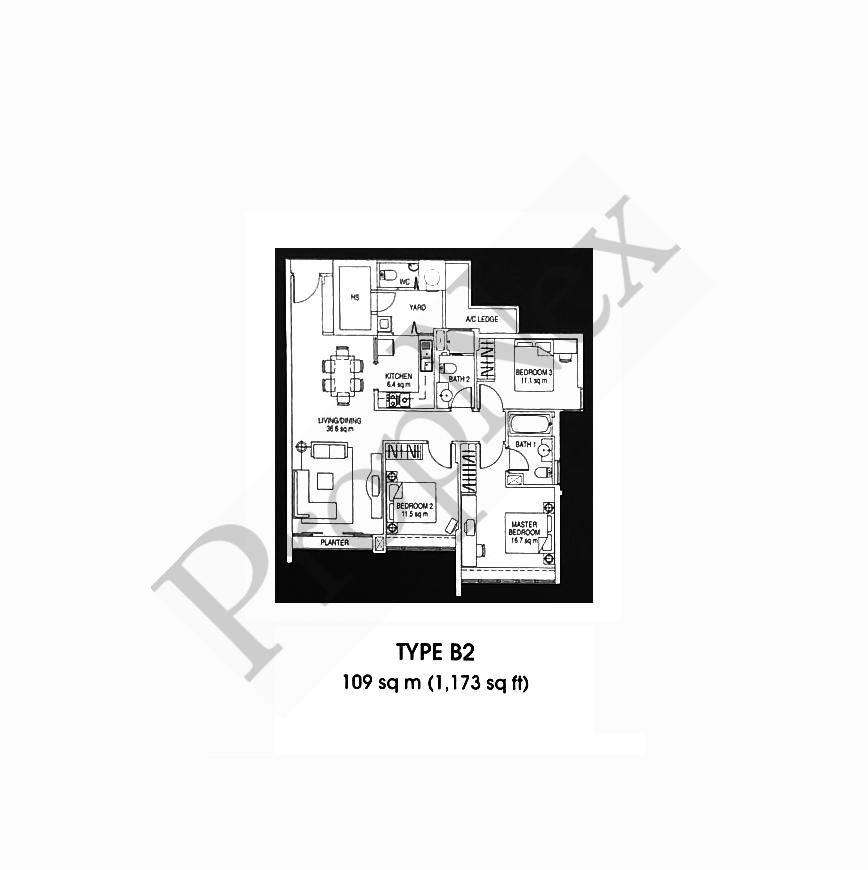
Room sizes: Master bedroom 16.7 sqm (king bed with room to spare), common bedrooms 11.5 sqm and 11.1 sqm (queen + wardrobe + desk in both), living/dining 36.8 sqm, enclosed kitchen 6.4 sqm with yard and bomb shelter.
Quality check: Every bedroom comfortably fits a queen-sized bed with furniture. The master at 16.7 sqm is larger than what most new launches deliver. Enclosed kitchen with a proper yard, no open-concept cooking smells drifting into the bedrooms. No oversized balcony eating into usable space, just a small planter. For its age, this layout holds up against anything launched in the last five years on room sizes alone. The land size is decent for an HDB enclave condo, and the grounds function as a full-fledged development. The facade will show its age, so factor in $80,000 to $120,000 for renovation.
Price check: At $1.3 million, this is what we call the lowest hanging fruit: there is almost nothing below you in price for a proper three-bedroom condo in a mature estate. That matters. When land costs continue to rise and new benchmarks get set by upcoming launches, the lowest rung of the ladder rises by default.
Exit check: Future HDB upgraders in the surrounding estate looking for their first private property will have this as one of their most affordable entry points. Cross Island Line MRT station under construction nearby, one stop from Pasir Ris Mall, surrounded by primary schools. Rental at $4,000 to $4,400 per month gives a gross yield of 3.6 to 4.0 percent, solid for a property at this age. The buyer pool is deep (upgraders, budget-conscious families) and the MRT access will only improve it. Look out for our upcoming Pasir Ris 3-bedroom comparison: join our Telegram community to get notified when it drops.
QPE verdict: Quality is passable for its age and price. Price is at the bottom of the market. Exit is supported by a deep upgrader pool with MRT improvements coming. All three circles overlap. Not perfectly — the lease is about 75 years remaining and the building shows its age, but the framework says this is a defensible position.
Three circles. One condo. That is how every review on this site gets written.
Data sources: URA Realis, EdgeProp Singapore
Published by MJ Review Homes (reviewhomes.sg) | PropNex Realty Pte Ltd | Shaik Amar R058640H | Myra Jalil R058979B | +65 9690 5440 | +65 9738 3705