On May 22, MND, URA and BCA issued Circular coh26-01, putting two new frameworks into force. The Land Sales Disqualification Framework can lock errant developers out of every Government Land Sales site with residential potential for up to five years. The Sales Suspension Framework can place future unlaunched projects on a no-sale list. Both penalties travel to directors, substantial shareholders, and any connected company — and the public list at go.gov.sg/land-sales-disqualification becomes a new diligence input for buyers and JV bidders.
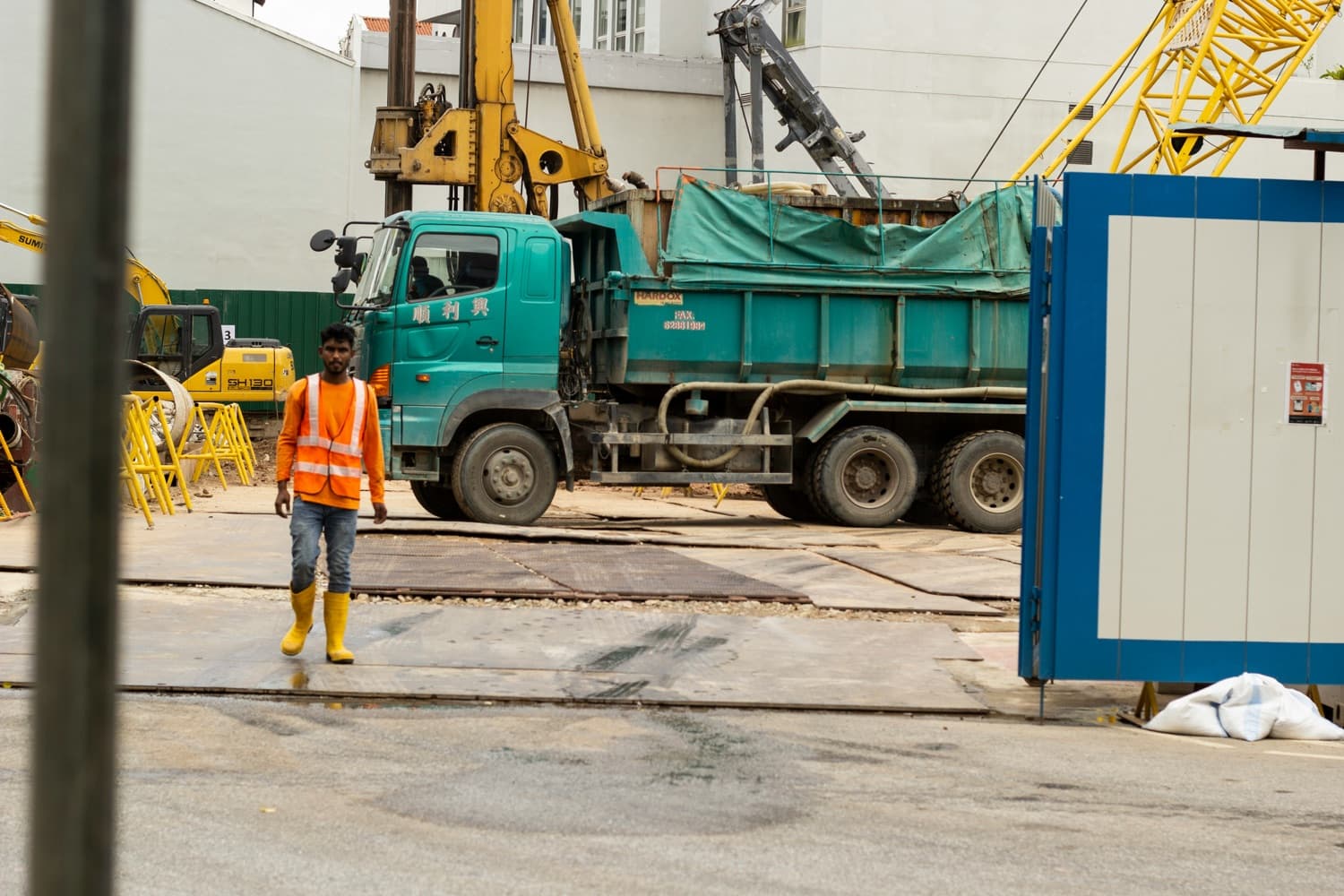
Sources: URA Circular coh26-01, MND, BCA, EdgeProp Singapore. Hero photo: Alvina Suhardjo
What changed on May 22
On May 22, MND, URA and BCA jointly issued Circular coh26-01 that changes what happens when a Singapore developer delivers a project with major defects or serious safety failures. From the same day, two new frameworks took effect. The Land Sales Disqualification Framework can lock an errant developer out of every Government Land Sales site with residential potential for up to five years. The Sales Suspension Framework can put their future unlaunched projects on a no-sale list for the same window.
The penalties travel. They extend to directors, substantial shareholders, and any other company those people sit on as a director or substantial shareholder. Anyone caught is published publicly on a government-maintained list at go.gov.sg/land-sales-disqualification.
If you are shopping a new launch this year, the pricing today does not move. What does move is which developers will still be in front of you in 2028 and 2030. The frameworks do not affect the majority of developers, since MND says most have complied with existing measures. But the bar for acceptable behaviour moved up on May 22.
The two frameworks side by side
The circular sets up two distinct frameworks, each with its own clock. They can be applied separately or together. Both run for a maximum of five years.
| Lever | Land Sales Disqualification | Sales Suspension |
|---|---|---|
| What it does | Bars the developer from bidding on GLS sites with residential potential | Places the developer on a sales suspension list; imposes a no-sale licence condition on future unlaunched projects |
| Maximum duration | 5 years (Land Sales Disqualification Period) | 5 years (General Sales Suspension Period + Project-Specific Sales Suspension Period) |
| Who decides | MND, URA and BCA jointly, after early warning plus opportunity to make representations or rectifications | MND, URA and BCA jointly, same process |
| When the clock starts | Date stated in the authorities' notification | Date stated in notification (General) / date of housing developer's licence issue (Project-Specific) |
| Periods can stack | Concurrently or consecutively | Concurrently or consecutively |
| Covers en bloc / private land | No (excluded) | Sales suspension still applies to private-land projects via the no-sale licence condition |
Source: URA Circular coh26-01
The Land Sales Disqualification clock covers every government tender from May 22 onward. That means all sites launched by ministries, organs of state, departments and statutory boards where residential units can be built. It includes the obvious categories (Residential, Residential with Commercial at 1st Storey) and the less obvious ones (Commercial & Residential, Hotel, and White sites that allow residential).
What it does not cover is private land. En bloc deals between existing owners and developers are out of scope of the Land Sales Disqualification Framework. The Sales Suspension Framework can still hit a private-land project, because the no-sale licence condition attaches to the developer's licence, not the source of the land. A developer banned from GLS can still buy en bloc, but they cannot launch what they build if the suspension list catches them.
What counts as errant behaviour
The circular names two triggers. Either one is enough on its own.
Trigger 1: severe regulatory non-compliance. The developer delivers a project with safety failures that affect occupants or the general public. The circular names three examples: wall collapses, serious fire hazards, and flooding that causes major damage or accidents.
Trigger 2: recalcitrant behaviour. The developer has consecutive projects with major defects. Not one project. Not two unrelated ones. A pattern. The word "consecutive" is doing real work in the legal text. It forces the regulator to look at the developer's track record across multiple completed projects, not a single bad handover.
| Trigger | What it covers | Examples / standard |
|---|---|---|
| Severe regulatory non-compliance | Safety failures affecting occupants or the public | Wall collapses, serious fire hazards, flooding causing major damage or accidents |
| Recalcitrant behaviour (major defects) | Pattern across consecutive projects, not one-off | Missing or broken architectural accessories, cracked/chipped windowpanes, shower screens, mirrors, cracked tiles or stones (per BCA's CONQUAS classification) |
Source: URA Circular coh26-01
When the authorities assess a case, they weigh five factors. The number and severity of issues relative to project scale. The time the developer took to rectify. The extent of impact on home buyers, including whether safety and liveability were affected. Any aggravating or mitigating circumstances. And, for relevant parties, the extent of their control over the developer's business decisions.
That last factor matters for buyers. It determines who in a corporate group gets caught beyond the company itself, and whether the developer name on your sale and purchase agreement is the only entity on the hook, or whether broader corporate exposure can hit a future project.
Who else gets caught alongside the developer
The penalties do not stop at the company's name. The circular defines "relevant parties" broadly, drawing on section 81 of the Companies Act 1967 for the substantial shareholder definition.
Caught alongside the errant developer:
- Its directors
- Its substantial shareholders
- The directors of those substantial shareholders
- Any other company where the errant developer, a disqualified or suspended director, or a disqualified or suspended substantial shareholder is itself appointed as a director
- Any other company where the same parties are appointed as a substantial shareholder
- Any company that has those parties as directors of its substantial shareholders
The structure is designed to catch the corporate-veil moves that regulatory cases sometimes turn on. If Company A is the developer and goes on the disqualification list, Company B — which shares a director with A, or shares a substantial shareholder, or has A's shareholder sitting on its board — cannot just step in and bid on the next GLS plot.
For joint venture structures, the implication is practical: vet every partner's directors and shareholders before committing to a bid. URA's circular tells "all prospective land bidders (including joint ventures) to check their eligibility" and to confirm directors, substantial shareholders, and other relevant parties are clean before tendering.
The full list of disqualified and suspended parties is published and kept current at go.gov.sg/land-sales-disqualification. Bids submitted by anyone on that list are not considered.
Where this sits in the quality stack
This is not a brand-new posture. BCA has been running quality-enforcement levers on the private housing pipeline for decades, and the circular acknowledges that explicitly. The new frameworks also follow a busier-than-usual policy quarter for housing in Singapore. The EC scheme reset on May 8 was the previous major announcement.
The existing stack:
- CONQUAS, BCA's national workmanship-quality system, introduced in 1989. Applied to every GLS site
- Enhanced inspections for residential units built by developers with poor or no track record
- Public CONQUAS performance disclosure, which lets buyers check how a developer has scored on past projects
- Existing suspension of sales privileges for errant developers, the precursor lever that the new Sales Suspension Framework now formalises
The two new frameworks sit on top of that. Same enforcement bodies, same evidence base (CONQUAS scoring plus on-site inspection findings), but with a sharper consequence at the top end of the severity scale.
MND's framing is consistent: most developers have complied, the majority of new private housing in Singapore is delivered without these issues, and the new frameworks are not expected to affect the majority of real estate developers. The lever is calibrated for the outlier — the developer with a pattern of safety failures or repeated major defects across consecutive projects.
What it means for GLS bidders and JVs
For developers planning to bid on GLS over the next five years, the diligence work changed shape on May 22.
Internal track record matters more. A developer with one defects-heavy project in recent memory now has to worry about whether the next one tips them into "consecutive" territory under the recalcitrant-behaviour definition. That changes how aggressively they manage the rectification window after TOP and how seriously they push subcontractor workmanship at handover.
JV vetting becomes operationally important. Before bidding, every JV partner needs to confirm they are not on the disqualification list, and that none of their directors or substantial shareholders are either. URA's circular is explicit on this point: bids submitted by disqualified parties will not be considered. For background on how GLS tenders are structured and evaluated, our GLS tender explainer covers the basics.
Corporate restructuring as a workaround also stops working. The relevant-parties definition catches sister companies that share directors or substantial shareholders. Setting up a clean shell to bid on the next GLS site does not solve the problem if the controlling individuals are on the list.
For the pipeline itself, the 1H2026 GLS slate is largely unaffected. See our 1H2026 GLS market commentary for the supply context. The new frameworks apply prospectively, to tenders launched on or after May 22. The Bayshore Drive, New Upper Changi Road, Berlayar Drive, and Peck Hay Road tenders coming up later this year will be among the first to require all bidders to confirm clean status.
What it means for buyers right now
For most buyers shopping a new launch today, the headline answer is: not much, immediately. Pricing on already-tendered sites is set. Launches in the next 12 to 18 months are by developers already in the pipeline, already through the BCA tender-stage checks, and not on any disqualification list, because the list did not exist until yesterday.
What does change is downstream, and across two channels.
The first is the research input. When you are evaluating a new launch from 2027 onward, the public list at go.gov.sg/land-sales-disqualification becomes a quick check. If the developer is on it, the project is not happening. If their parent company or a major shareholder is on it, the picture is more complicated and worth asking about before committing to a unit.
The second is the construction quality signal. The frameworks raise the cost of cutting corners. Developers know that a pattern of major-defects projects can now translate into five years of zero new launches. That changes how seriously they take CONQUAS scoring, post-TOP rectification, and the workmanship of subcontractors. None of that shows up in a launch-day price list, but it does show up in how a unit looks at handover.
For resale buyers, none of this affects existing TOPs. Quality assessment on an existing condo is done the old-fashioned way. You inspect the unit, check the building's defects history, and look at how the developer has handled past complaints. Our floor plan red flags guide covers the buyer-side diligence checklist.
That said, the secondary read for resale is that aging condos by developers who later end up on the disqualification list could see softer resale demand. Buyers who know about the list will price that in. No names have been added yet. The list went live on May 22. Watch it from here.
How MND, URA and BCA tightened the screws
The substantive shift is the public list. Suspension of sales privileges existed before the circular, but it ran case by case, without a central published register. The new Land Sales Disqualification Framework formalises both the trigger criteria and the published list, which means every prospective JV partner, every land-bid auditor, and every diligent buyer has a single source of truth to check.
The five-year ceiling is also new. Previous quality-enforcement levers were episodic: a project-specific no-sale order, a one-off bid disqualification, with no clear maximum window. Setting up to five years at the top end gives the authorities room to scale the consequence to the severity, and it gives developers a clearer expectation of what is at stake.
The circular leaves the existing CONQUAS scoring, public performance disclosure, and enhanced-inspection regimes untouched. Those remain the day-to-day enforcement layer. The new frameworks are the upper tier, for the cases where existing measures have not deterred the behaviour.
How meaningful the reset becomes depends on how MND, URA and BCA actually use the lever. The first names added to the list will be the real signal. Until then, the framework exists, the list exists, and the diligence task for buyers and JV bidders is heavier than it was a week ago.
Data sources: URA Circular coh26-01 (issued 22 May 2026), Ministry of National Development, Building and Construction Authority, EdgeProp Singapore, https://go.gov.sg/land-sales-disqualification
Published by MJ Review Homes (reviewhomes.sg) | PropNex Realty Pte Ltd | Shaik Amar R058640H | Myra Jalil R058979B | +65 9690 5440 | +65 9738 3705