A district average blends winners and losers, and the gaps inside one postcode are huge. In District 5, Clementi and West Coast Vale resales banked $300,000-plus at 5 to 6% a year while Pasir Panjang managed 1 to 4%. Prime District 9 came last among the top districts at 2.2%, yet River Valley's Martin Modern ran 6 to 7%. And in District 14, Parc Esta averaged 6.1% a year while one-bedroom Geylang boutiques lost money. The district is the wrong unit. Read the development, the layout and the price you pay.
Sources: PropNex Research, URA Realis, EdgeProp, 99.co, Stacked Homes, LTA, MOE
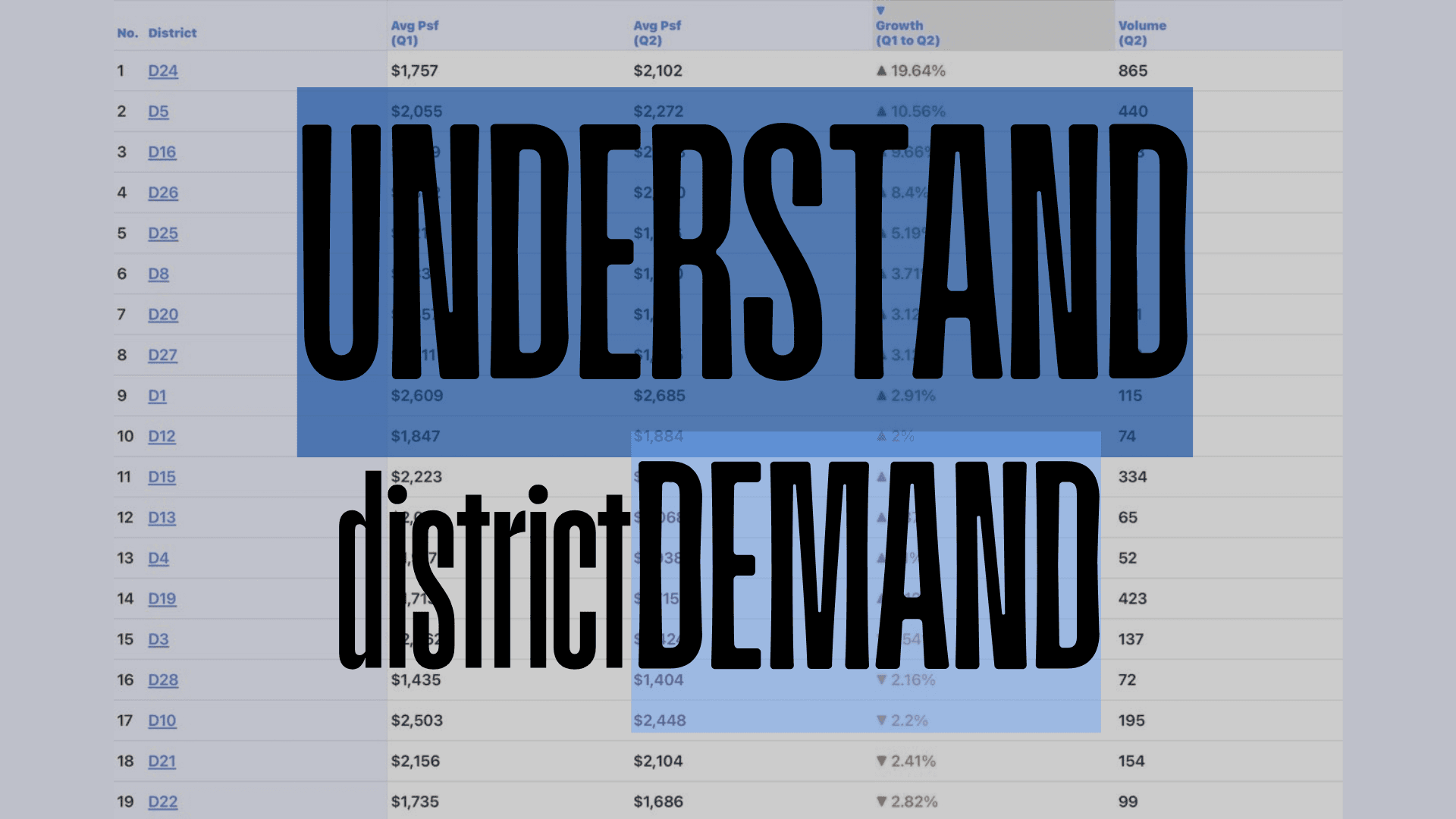
Every year, someone posts a ranking of Singapore's most profitable property districts, and it spreads fast. People screenshot it and treat it like a shopping list: the top district made 5.5% a year in 2025, so that's where you buy.
But you can't buy a district. You buy one home, on one street, inside a postcode that runs from a busy MRT town at one end to a quiet seafront road at the other. All under one number. So start with what that number is hiding.
Why a district number tells you almost nothing
A postcode is just a mail box. Singapore drew the lines to deliver letters, not to tell you where prices go up.
Look at what each one covers. District 5 runs from Clementi through West Coast and Pasir Panjang to Dover. District 9 has Orchard and Cairnhill right next to River Valley. District 14 puts Eunos and Paya Lebar in the same box as the Lorong streets of Geylang. Each of these areas has its own MRT, its own buyers and its own prices. The district number just averages them all together. Mix a strong area with a weak one and the average fits neither.
Take the three I just named.
District 5 is not "Clementi." It is at least two markets.
Say "District 5" and most buyers picture Clementi: the one-north and NUS job belt next door, a straight East-West Line ride into town, that settled-neighbourhood feel. Fair enough. But the same code also covers Pasir Panjang, West Coast and Dover. Pull the resale records apart and the two halves barely look related.
Start on the Clementi and West Coast Vale side. These are resales: the original buyers selling after the project was built.
| Development | Avg profit per resale | Median gain | Avg hold |
|---|---|---|---|
| Clavon (Clementi Ave 1) | $315,000 | 25.7% | 4.0 yrs |
| One-North Eden (Slim Barracks Rise) | $326,000 | 19.2% | 3.7 yrs |
| The Clement Canopy (Clementi Ave 1) | $306,000 | 24.6% | 5.2 yrs |
| Whistler Grand (West Coast Vale) | $268,000 | 27.2% | 4.5 yrs |
| Twin VEW (West Coast Vale) | $262,000 | 20.7% | 4.5 yrs |
| Parc Riviera (West Coast Vale) | $180,000 | 20.9% | 5.0 yrs |
Resale transactions. Source: URA Realis caveat records, with Clavon subsale data via EdgeProp and 99.co.
Nobody on that list sold at a loss recently. The big trades go further. A Clement Canopy four-bedder resold at $2.78M, a $1.05M gain after nine years. A Clavon five-bedder went for $3.6M, up $951,000 in four. Even Clavon's units sold before the building was finished went for about 30% above the launch price, and 99.co puts its yearly gain near 5.4%.
Pasir Panjang sits in the same D5. Nobody there is really losing money either. Sellers still come out ahead, they just do it slowly.
| Development | Typical gain | Annualised | Record |
|---|---|---|---|
| Kent Ridge Hill Residences (South Buona Vista Rd) | avg ~$154,000 / 13.7% | 1.1% to 3.9% / yr | 35 profitable, 1 loss |
| The Verandah Residences (Pasir Panjang Rd, freehold) | ~6 to 12% total over ~4 yrs | ~2% / yr | 30 profitable, 0 losses |
| The Infiniti (West Coast Park, freehold) | n/a | ~3.3% / yr over 10 yrs | n/a |
Resale transactions. Source: 99.co, EdgeProp, URA Realis caveat records.
So the gap is huge. Clementi and West Coast Vale make $300,000 to over a million in profit, about 5 to 6% a year. Pasir Panjang makes 1 to 4%. One group of owners built real money, the other barely moved.
Most of the gap comes down to jobs and the commute. Clementi sits on the East-West Line with a straight run to the CBD, and a Cross Island Line interchange is due around 2032. It also backs onto one-north, Science Park and NUS, so there's a big, well-paid pool of renters and buyers right at the door. Pasir Panjang only has the Circle Line, so getting to the CBD means changing trains. Less demand, less price growth. (Kent Ridge Hill Residences sits right between the two on South Buona Vista Road, which is why its numbers land in the middle.)
Why is River Valley carrying District 9?
District 9 is the one that really surprises people. This is Orchard, Cairnhill, Leonie Hill, about as prime as Singapore gets. And in a March 2026 update of the same PropNex data, it came in last of the top districts, at 2.2% a year.
It's not that prime D9 is a bad place to own. The average is dragged down by one kind of home: big, expensive units people bought near the peak of past booms. OUE Twin Peaks on Leonie Hill is the worst case. 48 of its 50 recent sellers lost money, anywhere from $105,000 to about $1 million each (EdgeProp). Scotts Square, in the heart of Orchard, sold 62 units at a loss and only 9 in profit. A four-bedder at The Orchard Residences resold for a $3.32M loss. Those are the deals pulling the district number down.
River Valley is a few minutes away and still inside D9, but it looks nothing like that. Martin Modern, a 99-year leasehold off River Valley Close, has five of its six recent resales in profit, with gains of $789,000 to $1.15M, around 6 to 7% a year. The Avenir, freehold, had a standout sale in August 2025: a four-bedder at $9.3M, up about $1.4M in five years. Great World MRT opened on River Valley Road in 2022, the Martin and Killiney end is within 1km of River Valley Primary, and Orchard is one stop away.
The deeper reason is demand, and it comes in two layers. After the East Coast, River Valley is about the most wanted address in Singapore, and that pull doesn't fade. An old-school, deep-pocketed crowd keeps buying the big freehold units here, year after year. The newer leasehold launches are built for the next group down: people who want into River Valley but can't stretch to a big freehold. A 1,500 sqft two-bedder at a freehold like Rivergate prices most of them out, so they take a smaller, newer leasehold unit instead. Both groups want the same address, and that is what holds the area up.
And River Valley isn't a free pass either. Irwell Hill Residences is also River Valley, and its first owners have seen barely 1% growth since it was built.
Why is District 14 carried by a few launches?
District 14 splits the same way, but here it's the type of building that matters, not the neighbourhood. Eunos, Paya Lebar and Geylang share the postcode, and the district's good name for capital gains rests on a few big, well-placed leasehold launches.
Parc Esta, right next to Eunos MRT, is the one people quote. Its resales averaged a $413,000 gain in the first half of 2024, about 6.1% a year (PropNex). Penrose, near Aljunied, had 98 profitable sales in 2024 (ERA), helped by a launch price that started below the market. Sims Urban Oasis, also near Aljunied, has a long run of profitable resales too.
But walk into the Lorong streets of Geylang and it flips. EdgeProp looked at four freehold condos along Lorong 24. At #1 Loft, 24 sellers lost money and only 7 made a profit. Across all four, the best gain anyone managed was under $180,000, and plenty came out behind. And these are freehold.
It's worth getting the reason right, because it's easy to blame the wrong thing. It has nothing to do with the Geylang name, or with the buildings being small. These are mostly one-bedroom units, and one-bedders are among the hardest layouts to resell. On top of that, freehold prices here trail the rest of the east, about $1,516 psf against $1,953 islandwide. When few people want your exact unit and the area is priced soft, your layout and your entry price decide everything. The district label does almost nothing. And the other end of the district proves it: one freehold unit in Geylang made a $2.7M gain, the biggest in all of D14 (99.co).
Is the most profitable district a safe buy?
Remember the top district from the start, the one that made 5.5% in 2025? That's District 26. And a lot of that is one place: Lentor. Lentor Modern and the launches around it have been selling at strong prices, and that pulls the whole D26 number up.
But Lentor splits the same way, one level down. Even here, the projects aren't the same buy.
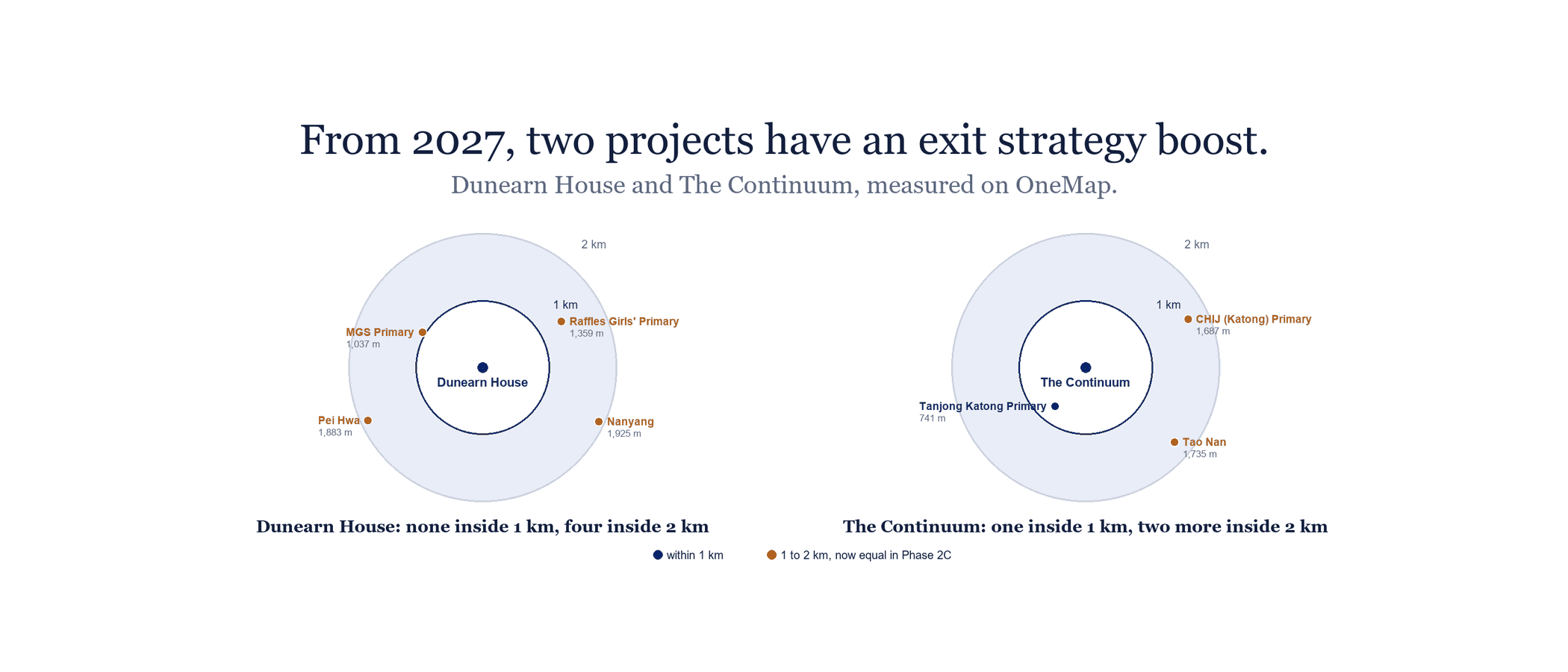
Take schools. Some Lentor projects sit within 1km of CHIJ St Nicholas Girls', which gives priority in the Primary 1 ballot. Lentoria is about 0.8km away, and Lentor Hills Residences is within 1km. Others miss it. Lentor Gardens Residences is around 1.2km out, just past the line. One project gets the school draw while the one down the road doesn't.
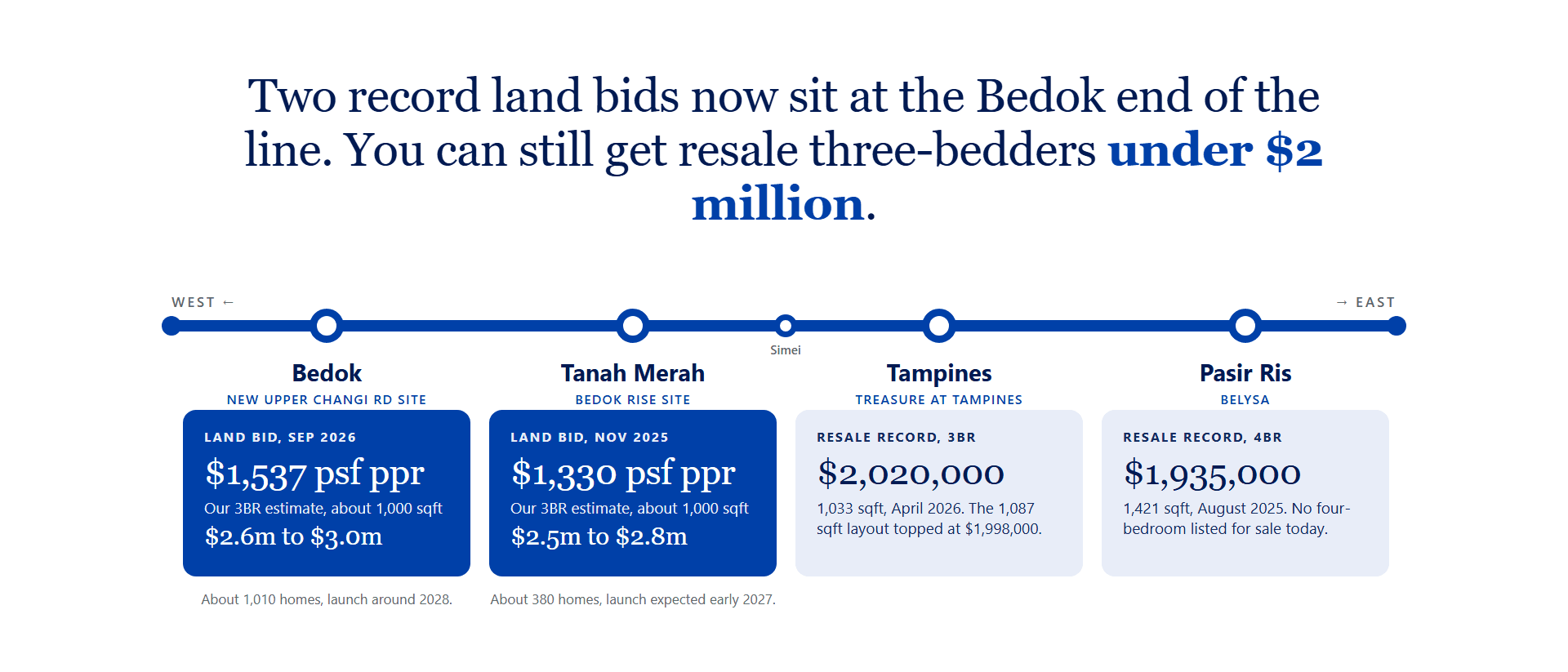
Then there's price. Lentor Gardens Residences is the 7th project to launch on this stretch, but it bought its land cheap, at $920 psf ppr. That low land cost is its first-mover advantage: it can come in keener than the projects that launched before it, even though it's the last one in. What you pay going in, project by project, matters far more than the D26 label. Our Lentor Gardens Residences review digs into the land cost and where its pricing is heading.
So even the most profitable district in Singapore isn't one thing. A new launch chasing the school catchment, a brand-new leasehold at launch prices, and a quiet freehold like Bullion Park are three completely different buys on the same stretch of road.
Pick the wrong one, and the D26 crown means nothing.
So how do you actually use a profitability ranking?
Treat it as a question, not an answer. A district topping the rankings is a reason to go look at it, not permission to buy anything with that postcode. The number you actually want is one level down: how has this exact building, in this exact layout, at the price you'd pay, sold over the years, and who buys it from you later.
A district at the top of the rankings can be full of homes going nowhere. The one quietly making 6% a year might sit in a district near the bottom, the way Martin Modern does inside a 2.2% D9. If you want a simple way to do that closer read instead of trusting the district average, our how to evaluate a condo guide walks you through it.
You buy an estate, not a district
These rankings will keep coming, and that's fine as a starting point. Just remember what a district really is: a mail box that can hold two or three completely different markets under one tidy number.
Clementi and Pasir Panjang share a district and almost nothing else. River Valley is holding up a District 9 that Orchard keeps dragging down. So whichever way the next ranking lands, you were never really buying the district. You're buying one estate, one address. What it's worth in ten years depends on who wants to live there, the layout, and the price you paid going in.
Data sources: PropNex Research (full-year 2025 and March 2026 resale condo market reports), URA Realis caveat records, EdgeProp project spotlights and profitable-transaction tools, 99.co project pages, Stacked Homes editorial, LTA newsroom (Circle Line, Cross Island Line), MOE SchoolFinder. Capital-gain figures are gross of taxes and fees and reflect transactions caveated to mid-2026; individual results vary by unit, floor, layout and entry price.