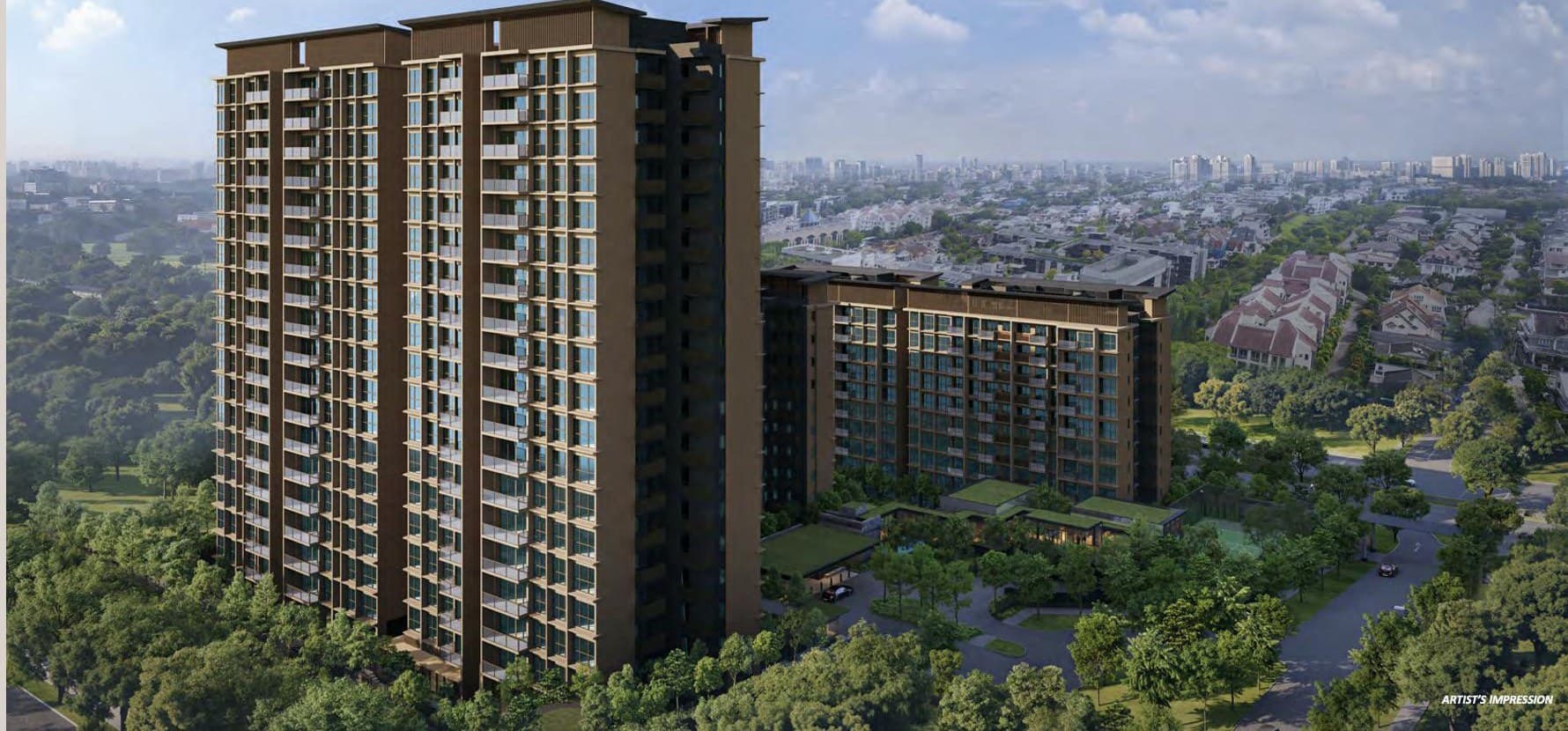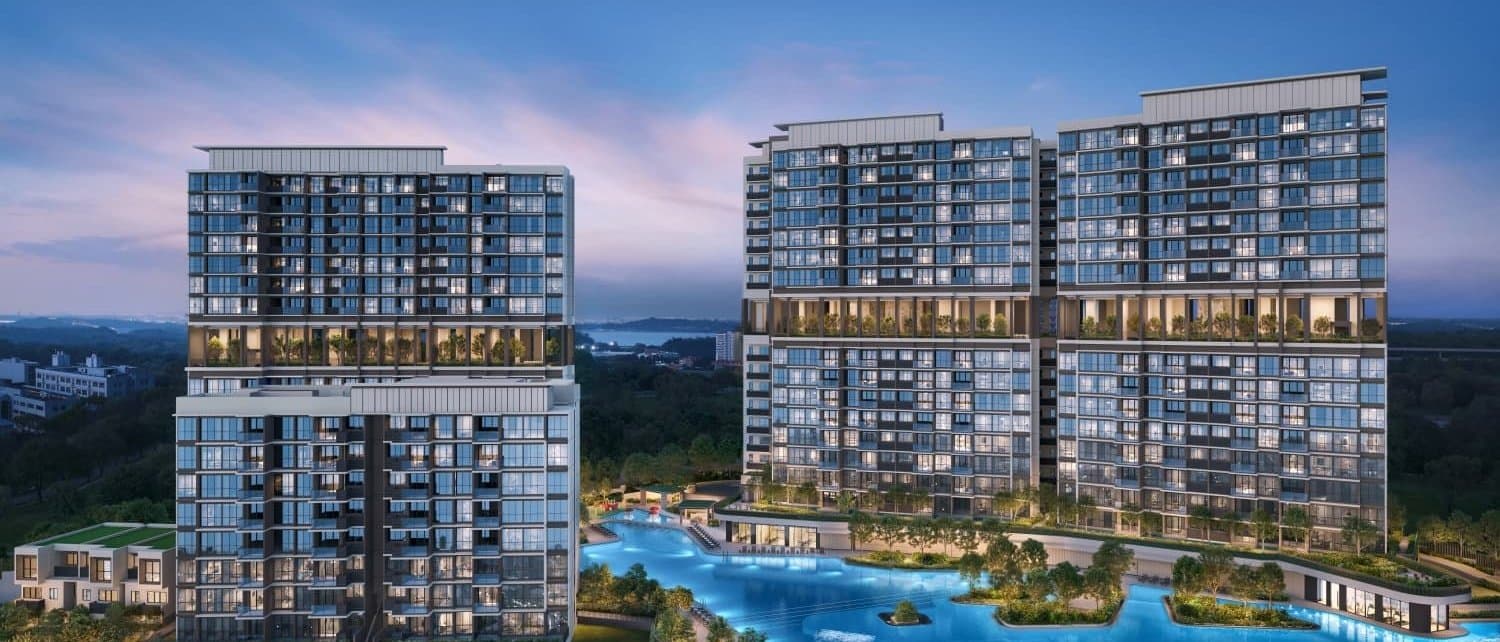
Hero Homes founder Heikal Shafrudin could have borrowed for a $2M condo. He bought a 1,152 sqft four-bedder at The Santorini for $1,400,000 in October 2022, four weeks after selling his Belysa three-bedder for $1,198,000 at a $308,000 gain. The 30% he left unspent bought eight years of holding power, and the 99:1 he took with almost no CPF inside let the couple decouple cleanly in August 2026.
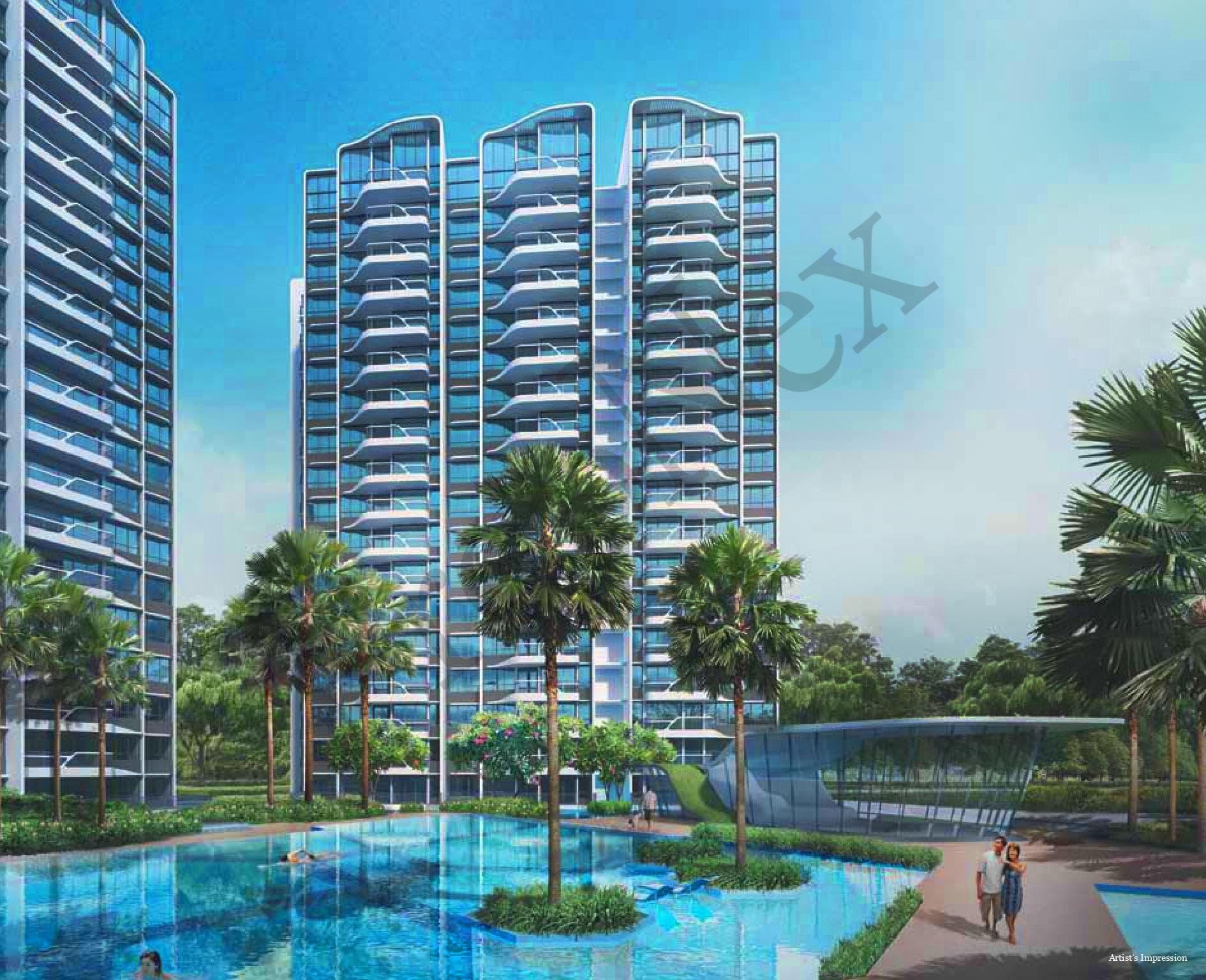
Heikal Shafrudin has been selling HDB-to-condo upgrades since 2009. His own home is a 1,152 sqft four-bedder at The Santorini in Tampines, bought resale for $1,400,000 in October 2022.
He walked us through the purchase on the record, and we should be upfront about the connection: Heikal founded Hero Homes, the group Review Homes grew out of. That is exactly why he goes first in this series, and why every number here comes from URA transaction records rather than memory. This is the first of our agent case studies: what the people who sell property for a living do when the money is their own.
Who is Heikal, and what does he tell buyers?
Heikal has held a licence since 2009. Most of his work is one move, repeated: HDB owners upgrading into a resale condo. He serves 12 to 15 households in a typical year, closing two to three deals in a busy month.
The advice he repeats most often is about staying power. "So what if you have a big budget, but you can't stay in the house for long?" A buyer who stretches to the top of their approval and then has to sell in year three, into whatever market year three happens to be, gives back everything the bigger unit was supposed to deliver.
The thing he most often talks clients out of is boutique developments, and in particular the duplex and loft layouts that cluster in them along the East Coast. On paper a duplex can read 1,800 or 1,900 sqft. A chunk of that is the double-height air space above the living room, which you cannot put a bed, a wardrobe or a child's desk on. You pay for the full figure and live in a fraction of it.
What did he buy with his own money?
| Bought | October 2022 |
| Project | The Santorini, 99-year leasehold, completed 2018 |
| Unit | Compact 4-bedroom, 2 bathrooms, 1,152 sqft, #02-xx |
| Total price | $1,400,000 |
| PSF | $1,216 |
| Transaction type | Resale |
| Status | Held. Decoupled August 2026 at a $1.75M bank valuation |
His income supported a purchase up to $2M. He set his own ceiling at $1.4M to $1.6M and signed at the bottom of it, financing 75% of the price.
Buying here meant giving up the school plan the search had started with. What replaced it was the daily logistics of a household with young children: the condo is one traffic light from his parents, who do the childcare, with amenities and a catchment of its own around it.
The second floor was for the window: at his block it faces trees and birds, which he wanted for the cats.
What he did not do is get a low-floor discount. Three units of the same 1,152 sqft layout were lodged with URA in 2022:
| Date | Floor | Size (sqft) | Total price | PSF | Type |
|---|---|---|---|---|---|
| Apr 2022 | 13th | 1,152 | $1,420,000 | $1,233 | Resale |
| Oct 2022 | 2nd | 1,152 | $1,400,000 | $1,216 | Resale |
| Dec 2022 | 6th | 1,152 | $1,460,000 | $1,268 | Resale |
Source: URA, Jan to Dec 2022. The October sale is Heikal's own purchase.
His $1,216 psf on the second floor sits 1.4% under the 13th-floor deal six months earlier. Eleven floors, and almost no gap. Compare that with what the same layout did in March 2026, when the fourth floor went for $1,690,000 and the eleventh for $1,800,000, a 6.5% spread across seven floors. He describes the unit in his own words as "a 2nd floor unit asking for 11th floor value," and he paid it anyway. His reasoning was supply: there was nothing else, and by his read it was still the cheapest four-bedroom on the market that week.
The thin-supply part checks out. Three sales of the layout in the whole of 2022 is roughly one a quarter, so a buyer who passed was waiting months for another. "Both times, we decided to purchase the moment we viewed," he says of his two homes. "And both times we didn't bother to negotiate hard."
Why buy four bedrooms to keep three?
They did not need four bedrooms. They wanted three, plus a living area much bigger than the one the plan came with, and the Type D3 layout had a route to it. Bedroom three sits in the middle of the unit, between bedroom two and the living room, with the dining table squeezed into a nook beside it. With that room gone, the centre of the plan opens up.
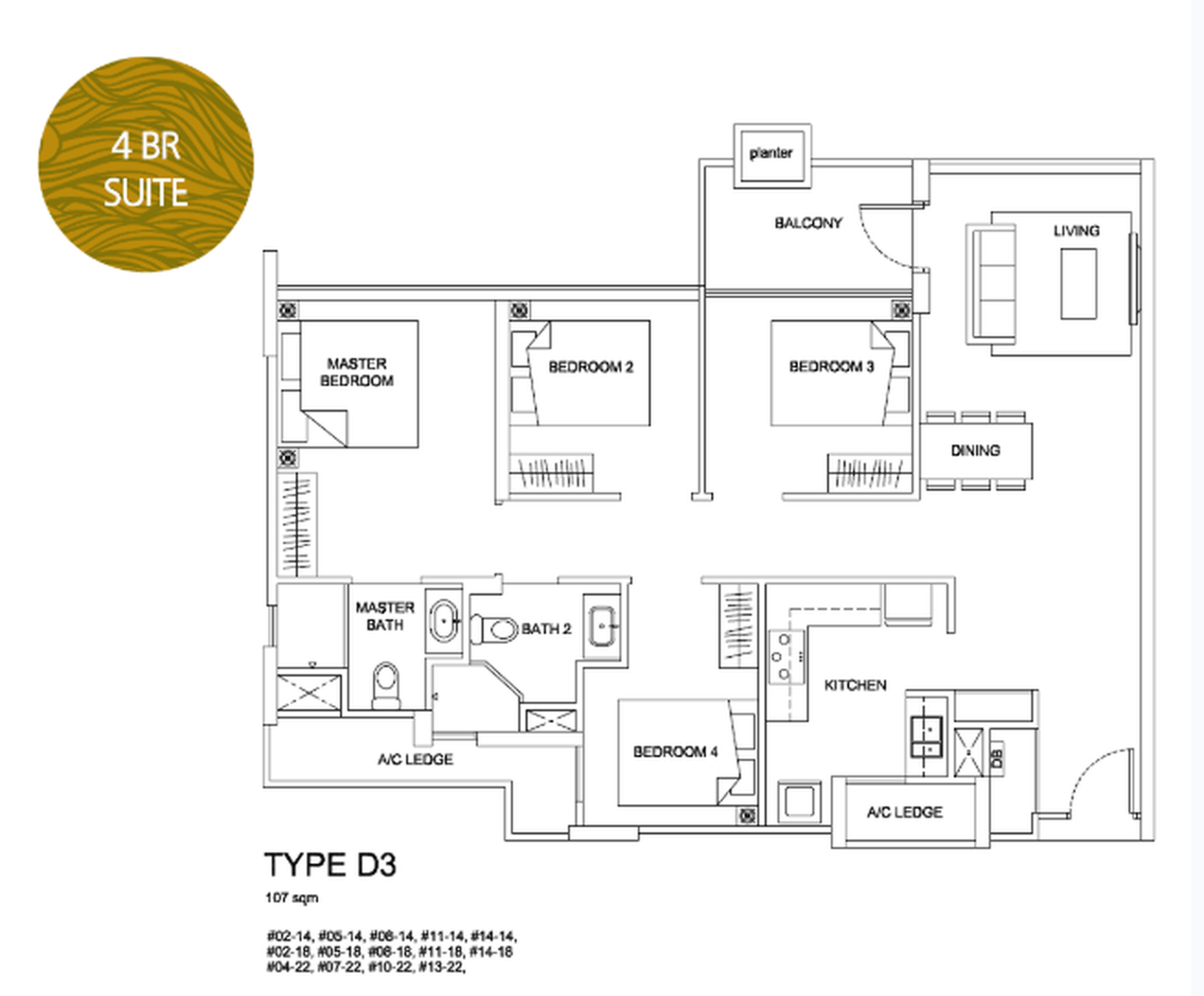 Source: Developer floor plan, Type D3, 107 sqm / 1,152 sqft, as sold.
The renovation did exactly that. The bedroom three walls came down, the dining table moved to where the bed used to be, and the old dining nook became part of the living area. One open living and dining stretch now runs the full length of the balcony, roughly double what the developer drew.
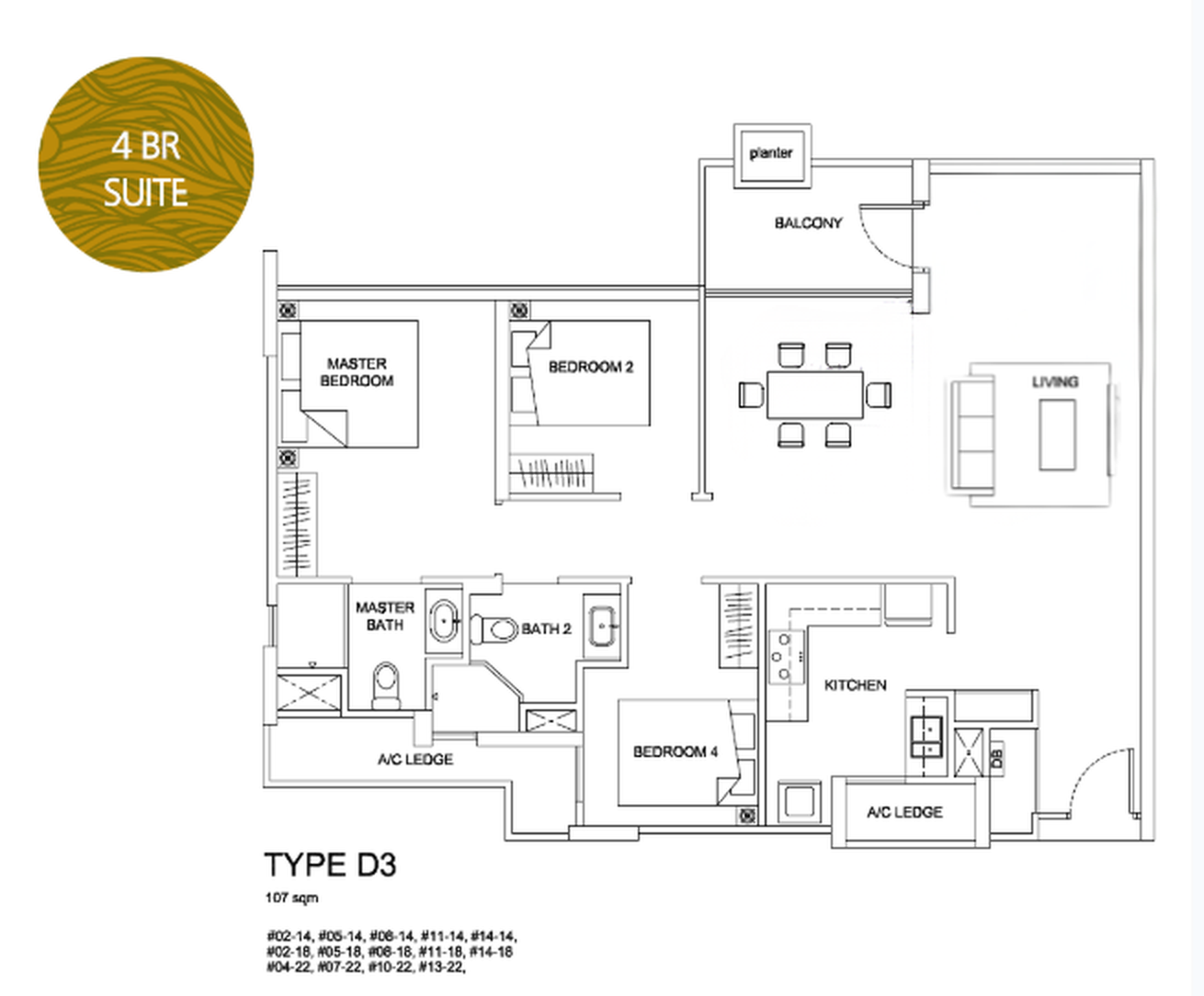 The same layout after Heikal took the bedroom three walls down. The dining table sits in the old bedroom's footprint, and the living area runs the length of the balcony.
It is the opposite of the duplex problem he steers clients away from. In a duplex, you pay for air space above the living room that nothing can sit on. Here, the fourth bedroom's price bought floor area, and once the walls came down, all of it became living space.
What else was on his list?
The search did not start in Tampines. It started around Temasek Primary, on the other side of Bedok, because the family wanted to be inside the 1km priority band for Primary 1 registration. Three other condos got as far as a viewing, and two of them got as far as an offer.
| Project | Unit | What he offered or saw | Outcome |
|---|---|---|---|
| Fairmount Condominium (Eastwood Road, D16) | 3-bedroom, fully renovated | Offered $1,360,000 | Rejected by the seller, and he did not chase it |
| Bayshore Park (Bayshore Road, D16) | 24th floor, full sea view | Viewed only | Walked away on layout and lease |
| The Tropica (Tampines Avenue 1, D18) | 3-bedroom, 2nd floor | Offered around $1.2M, seller counter-offered at a price he would have taken | Overtaken by The Santorini before he could close |
Prices are what Heikal offered or was quoted at the time, not lodged transactions.
Fairmount was the one that got closest on paper, and the reason he dropped it is a number. The condo sits about 1.2km from Temasek Primary in a straight line, and he measured it at 1.1km. Either way it falls outside the 1km band, which was the whole reason for looking on that side of Bedok. Sungei Bedok MRT is close enough to be a real selling point when he eventually resells, but on its own it was not enough to buy a home he had picked for a school he would miss.
Bayshore Park is the honest one. He fell for a 24th-floor unit with full sea views, then turned it down on an awkward layout and an older lease. He has since changed his mind about half of that: "on hindsight, doing more research now, I realise the older units really don't have any problems with financing, but has a perception issue only." The layout objection stands. The lease objection, he now thinks, was him pricing other buyers' nerves rather than the asset.
The Tropica is the one that shows how thin the market was. He had a 3-bedroom on the second floor at around $1.2M, the seller had come back with a number he could live with, and the deal was effectively there. Then the Santorini unit listed, and he took it within days at $200,000 more for a bedroom he planned to knock down.
Where did he follow his own advice?
He followed his own sequencing rule: sell first, buy later. The Belysa condo had cleared its seller's stamp duty window, an offer came, the buyer exercised the option in September 2022, and only then did the family commit to the next purchase, lodged four weeks later. That order spared him bridging costs and ABSD, and took the deadline off the search. He would rather sign a one-year rental lease and hunt slowly than buy against a clock.
The second follow-through is the budget, and it is the one most buyers get backwards. His household income supported a purchase up to $2M. He bought at $1.4M, roughly 30% below what the bank would have lent him, and the reason was cash rather than monthly repayment: "the downpayments needed would wipe out all the funds available, and leave me with zero holding power should my income or wife's income be affected for a period of time." Self-employed income made that risk concrete in a way a salaried buyer might discount.
What the unspent $600,000 bought was time: "I lowered my budget to ensure a larger holding power, with over eight years of coverage." Eight years of mortgage sitting in reserve is what let him build his team and test new marketing on his own listings without the house dictating any of it. It is the staying-power advice he gives clients, applied to his own purchase.
Where did he break his own rules?
The layout. A four-bedroom with no store room and no utility room, at 1,152 sqft, is exactly what he steers upgrader clients away from. In his experience, families shopping for four bedrooms want the storage and the helper's room, and the families who do not want them usually do not want four bedrooms either. He bought it anyway, because the entry price was right and because the layout trades: 17 sales of the 1,152 sqft type in five years, roughly one every quarter. A layout many upgraders skip can still be easy to sell when no other four-bedroom in the estate costs less.
The second break is not a break of his rules so much as a move most of his clients cannot copy cheaply. The manner of holding was set at 99:1 from day one, with Heikal taking the 1%. Anyone can register that split. The expensive part is unwinding it: decoupling means the exiting owner's CPF, plus accrued interest, must be refunded to his CPF account in cash. Heikal has been self-employed his whole working life and had less than $20,000 in his CPF Ordinary Account, so he put almost none of it into the purchase. When the couple decoupled in August 2026, moving his 1% cost little, his CPF refund was small, and his name came off the title clean. A salaried buyer with $150,000 of CPF inside the same 99:1 would need to produce that refund in cash before their name came off.
That manner of holding is legal when it is written into the purchase from the start, as it was here. The version IRAS has pursued is different: buying 100% first, then transferring 1% to a second person weeks later to dodge their ABSD. The Ministry of Finance set out that distinction in an April 2023 parliamentary reply, and the FAQ below covers it in plain terms.
What is The Santorini unit worth now?
The unit was valued at $1.75M for the August 2026 decoupling. Heikal believes it would fetch $1.8M on the open market, and that is his number, not ours.
Four units of the same 1,152 sqft layout have sold in the last twelve months, from $1,690,000 to $1,800,000:
| Date | Floor | Size (sqft) | Total price | PSF | Type |
|---|---|---|---|---|---|
| Aug 2025 | 7th | 1,152 | $1,710,000 | $1,485 | Resale |
| Mar 2026 | 4th | 1,152 | $1,690,000 | $1,467 | Resale |
| Mar 2026 | 5th | 1,152 | $1,760,000 | $1,528 | Resale |
| Mar 2026 | 11th | 1,152 | $1,800,000 | $1,563 | Resale |
Source: URA, Aug 2025 to Aug 2026.
Against his $1,400,000 entry, the $1.75M valuation is a $350,000 unrealised gain, 25% in just under four years. Unrealised is the operative word: he has not sold, and a second-floor unit will sit at the lower end of that table, the way the fourth-floor March deal did. That said, the supply side leans his way. Of the 28 active listings at The Santorini on PropertyGuru in August 2026, most are one- and two-bedders and none is a four-bedroom. Owners of his type are not selling.
The Belysa condo, bought, sold, and sold again
His previous home, a three-bedder at Belysa in Pasir Ris, shows the whole cycle, bought and sold with the outcome known.
| Bought | June 2019, $890,000 ($844 PSF), resale |
| Unit | 3-bedroom with utility, 1,055 sqft, #11-xx, Belysa (Pasir Ris) |
| Buyer's stamp duty | $21,300 |
| Sold | September 2022, $1,198,000 ($1,136 PSF) |
| Hold | 3 years 3 months |
| Gross gain | $308,000, or 34.6% (about 10.4% a year) |
| Selling commission | None. He ran his own sale |
| SSD at exit | Cleared. The 3-year window on his 2019 purchase ended in mid-2022 |
Source: URA. Belysa is a 315-unit former EC on Pasir Ris Drive 1, completed 2014.
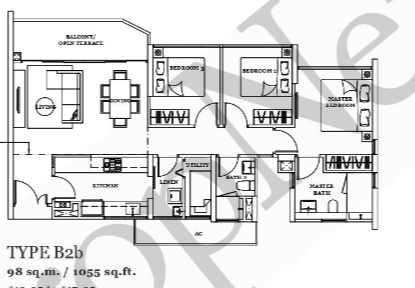 Source: Developer floor plan, Type B2b, 98 sqm / 1,055 sqft.
The entry shows the same pattern as The Santorini. Five units of the 1,055 sqft type sold at Belysa in 2019, between $890,000 and $970,000. His was one of the two at $890,000, the joint-cheapest of the year.
Selling his own unit saved him the commission a client would pay, around $24,000 at the typical 2% on a $1,198,000 sale. So the gain, net of the $21,300 stamp duty going in and zero fees going out, was about $286,700 before interest and renovation.
Prices for the unit he sold kept climbing after he left. The exact same unit changed hands again in February 2026, for $1,535,000, so the buyer who bought from Heikal in 2022 is sitting on a $337,000 gross gain of their own. Units of that type at Belysa sold at $1,500,000 and $1,580,000 in April and July 2026. Selling in 2022 left roughly $340,000 of Belysa's later run on the table. He would tell you the Santorini purchase collected $350,000 of its own over the same stretch, and that the sale is what freed his name to buy again.
Asked whether he would do both deals again at the same prices, he did not hedge: yes, both, on sight.
What he will not buy, and what you can learn from him
He still will not buy in a boutique development, and he still will not buy a duplex or a loft. He pays for rooms he can put furniture in.
Here is what you can take from it without a licence.
Sell first, then buy. That is what spared him ABSD and bridging costs, and any family can do it if they can put up with renting for a year. A year of rent is cheaper than rushing into the wrong home.
Buy under what the bank offers you, and count the gap in cash, not in monthly repayments. Heikal's income supported $2M. He spent $1.4M and left the rest where he could reach it.
That reserve is the part buyers skip. Putting more down feels like the safe move because the monthly repayment drops, but it turns cash you could use in a bad year into equity you can only get at by selling. Heikal kept enough to cover the mortgage for more than eight years, which counts for more when you are self-employed and a slow quarter is a normal thing. Nothing has forced him to sell in four years, so the $350,000 the unit has gained on paper is still there to collect.
Check what the layout has been selling for before you sign, not after. His $890,000 at Belysa was the joint-cheapest of the five 1,055 sqft sales that year, and anyone could have looked it up. At The Santorini he did the opposite on purpose: he knew he was paying a high-floor price for a low floor, and took it because nothing else was for sale. Both can be the right call. Just know which one you are making.
Two things are harder to copy. The 99:1 stayed cheap for him because he had almost nothing in his CPF to put in. A salaried buyer usually has plenty, and whatever went into the property has to be refunded to their CPF account in cash, with interest, before their name comes off. And he decided on the first viewing because he has walked a few hundred units. Most buyers do better taking their time.
Our what-if: would a new launch have done better?
This closing section is our analysis, not Heikal's account. He never considered a new launch, and every condo on his shortlist was a resale property. It is still the question most upgraders in his position ask, so we ran his timeline through the obvious alternative: Treasure at Tampines, the 2,203-unit Sim Lian project in the same district, which was about a year from key collection when he signed.
The unit that fits his brief there is the three-bedroom premium, sold in 1,012 to 1,087 sqft sizes, and it comes with the yard, utility room and separate WC his Santorini four-bedder lacks. By October 2022 the developer was long out of them, with the last new sales of the type lodged in February 2022, so buying one meant a sub sale: taking over an uncompleted unit from an early buyer, at 2022's price, for keys in 2023. Two units of the type changed hands in the weeks around his purchase, both 1,012 sqft, both at $1,600,000.
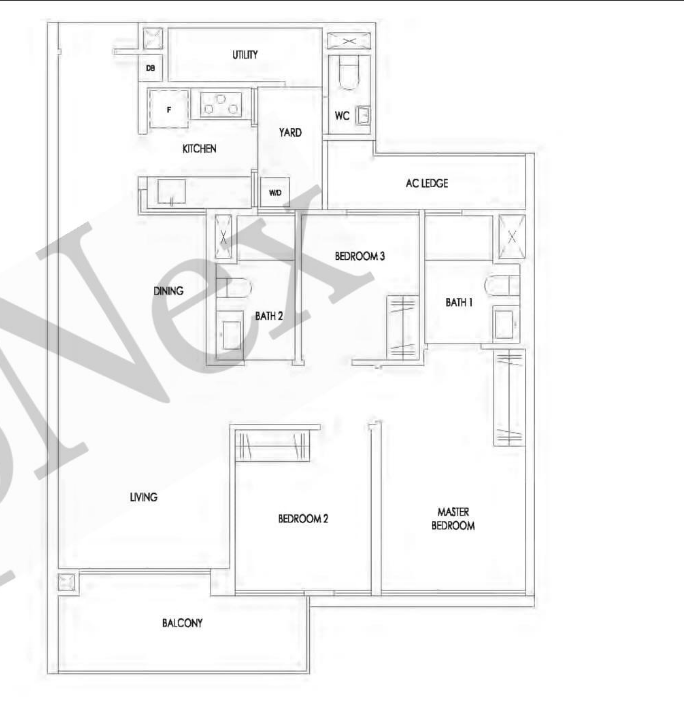 Source: Developer floor plan, Type C8P, 94 sqm / 1,012 sqft.
Here is his purchase against that one, all costs in.
| The Santorini, what he did | Treasure at Tampines, the what-if | |
|---|---|---|
| Signed | October 2022 | October 2022 |
| Unit | 4-bedroom, 1,152 sqft, 2nd floor | 3-bedroom premium, 1,012 sqft |
| Price | $1,400,000 (resale) | $1,600,000 (sub sale, uncompleted) |
| Buyer's stamp duty | $40,600 | $48,600 |
| 25% downpayment | $350,000 | $400,000 |
| Keys | On legal completion, about three months | At TOP in 2023, about a year away |
| Rent while waiting | None | Roughly a year of it |
| Worth now, last 12 months | $1.75M valuation; four sales, $1.69M to $1.80M | Median $1,940,000; 21 sales, $1.80M to $2.02M |
| Paper gain | $350,000, or 25% | $340,000, or 21%, before rent |
Source: URA.
The paper gains land within $10,000 of each other. Everything around them does not. The Treasure entry sat at the very top of his $1.4M to $1.6M ceiling and asked $58,000 more on day one, $50,000 of it downpayment and $8,000 of it stamp duty, against the reserves he was protecting. The keys were a year away, so the family rents through 2023, straight into the rental spike: about $3,000 a month for a four-room HDB flat in Tampines, over $4,000 for a three-bedroom condo. Call the year $36,000 to $50,000, plus deposits, movers and a second move at the end of it. And the home waiting after all that is 1,012 sqft, 140 sqft smaller than the one he bought, with no spare bedroom to knock into the living room. After rent, the what-if collects roughly $300,000 against his $350,000, with more money in and a smaller home at the end.
One example does not settle new launch against resale, and it is not meant to. New launches have a real advantage, and it is predictability: a fixed price list, a brand-new product, no seller across the table, and a payment schedule that spreads the downpayment out. What no launch can promise is what the market looks like when the keys arrive. This estate has already run that experiment once: The Santorini itself launched in March 2014, still had 360 of its 597 units unsold two and a half years later, and its early buyers waited the better part of a decade for prices to move.
Resale has no price list and no script, and that is exactly why the work matters. A resale buyer can read the layout's whole transaction history before signing, pay for the floor and not the storey above it, and move in the quarter the sale completes. That work is quality, price, exit, the same three questions behind every review on this site. Heikal's $350,000 came from doing it well, and from a home his family lived in the entire time it was earning.
If you are in the middle of a search like this one and it is not going anywhere, the problem is usually the method. Picking a resale unit that holds its value is a different job from picking one you like: it means reading the layout's own sale history, knowing what a floor is worth before you pay for it, and being honest about who buys it from you in five years. Not every agent works that way. It is the work behind every review on this site, so if you want a second pair of eyes on a shortlist, ask.
To work with us, send MJ a message on WhatsApp with your budget and where you are in the search, and we will run your shortlist the way this case study was run, before you commit to anything.